Your dachshund pauses at the bottom of the stairs, looks up, and decides not to climb. Maybe it’s nothing. Maybe it’s the first sign of something serious. So you search for answers late at night, and the results scare you more than they help.
That worry is fair. The long back is the breed’s main weak point, and spinal disease, called IVDD, is the biggest single risk. But the picture is more balanced than the scary headlines suggest. Many dachshund health problems can be caught early, and some can be reduced with daily habits at home.
This guide is for owners who already know the basics and want a clear map. It asks the question underneath most searches: are dachshunds really unhealthier than other dogs? Then it ranks the conditions, lists the early warning signs, explains when to call a vet, and builds a prevention plan you can start this week.
It does not diagnose your dog or promise outcomes. Only a vet can examine your dog, name a problem and choose treatment. Breed-specific coat and colour topics, such as dapple eye and hearing risks, are left to their own guides. The full list of sections follows the Key Takeaways.
- IVDD, a disc problem in the long spine, is the breed’s main health risk, and sudden weakness, dragging paws or paralysis means a vet visit right away.
- Purebred dogs were not shown to be sicker overall than mixed-breed dogs in a large owner-reported survey, but the dachshund’s back risk is specific to its build.
- Body weight is the risk you control most directly: extra pounds add load to the spine and joints.
- Older dachshunds can have several non-spinal conditions at once, including dental, eye, hormone and heart problems, and a vet exam sorts them out.
- Daily habits such as measured meals, ramps, careful lifting and no jumping from furniture cost little and protect the back.
Disclaimer: This article is for informational purposes only and does not constitute veterinary advice. If you have concerns about a dog’s health or genetics, consult a licensed veterinarian.
Table of Contents
- Key Concepts & Terminology
- Are Dachshunds Healthy Compared With Other Breeds?
- IVDD: Causes, Early Signs, Age and Stages
- Can Dogs Die or Recover From IVDD, and What Does Treatment Cost?
- Joint Problems and Obesity: How Weight Adds to Spinal Risk
- Other Conditions: Cushing’s, Thyroid, Heart, Dental, Eyes and Cancer
- Prevention: Weight, Spine Protection and Daily Care
- Coping With a Sick Dachshund
- Is It Cruel to Breed Dachshunds?
- When Home Care Is Not Enough: Limits of This Guide
- Next Steps
- FAQ
Key Concepts & Terminology
A few terms come up again and again in vet visits and in this guide. Knowing them makes the conversation with your vet easier.
- Intervertebral disc disease (IVDD) is a condition where the cushioning discs between the spinal bones bulge or burst and press on the spinal cord. Disc disease occurs in dogs of any age or breed, but it is seen most commonly in short-legged breeds, and the dachshund is the first breed named (UC Davis School of Veterinary Medicine, 2018). When a vet says “disc disease” or “a back problem,” this is usually what they mean.
- Disc is the soft, shock-absorbing pad that sits between two spinal bones. Think of it as a small jelly doughnut. When the outer wall weakens or tears, the filling can push toward the spinal cord.
- Hip dysplasia is an inherited condition where the hip joint forms incorrectly, leading to looseness, or laxity, and later arthritis, pain and discomfort (Cornell University College of Veterinary Medicine, 2026).
- Luxating patella is a kneecap that slips out of its normal groove. Dogs often skip or hop for a few steps on a back leg, then walk normally again.
- Cushing’s disease is a hormone disorder where the body makes too much of the stress hormone cortisol. It tends to appear in middle-aged and older dogs, and only a vet can test for it.
Pain and paralysis terms matter too. Pain means the dog can still feel and move its legs but hurts, so it may yelp, shake or stand hunched. Paresis means partial weakness: wobbling, knuckling or dragging paws. Paralysis means the dog cannot move the legs at all. Vets also ask whether a dog still has “deep pain” sensation, meaning it reacts when a toe is pinched firmly. That test tells them a lot about the outlook.
These are definitions only. The sections ahead explain each condition in more detail.
Are Dachshunds Healthy Compared With Other Breeds?
Dachshunds are not shown to be sicker overall, but they do carry a breed-specific back risk. In the Dog Aging Project, purebred dogs did not show higher lifetime prevalence of medical conditions than mixed-breed dogs, and a higher proportion of purebreds had no owner-reported conditions (Frontiers in Veterinary Science, hosted by PubMed Central (PMC), 2023). That finding is general, not about dachshunds alone. The breed is also described as susceptible to several health conditions throughout life (PetMD).
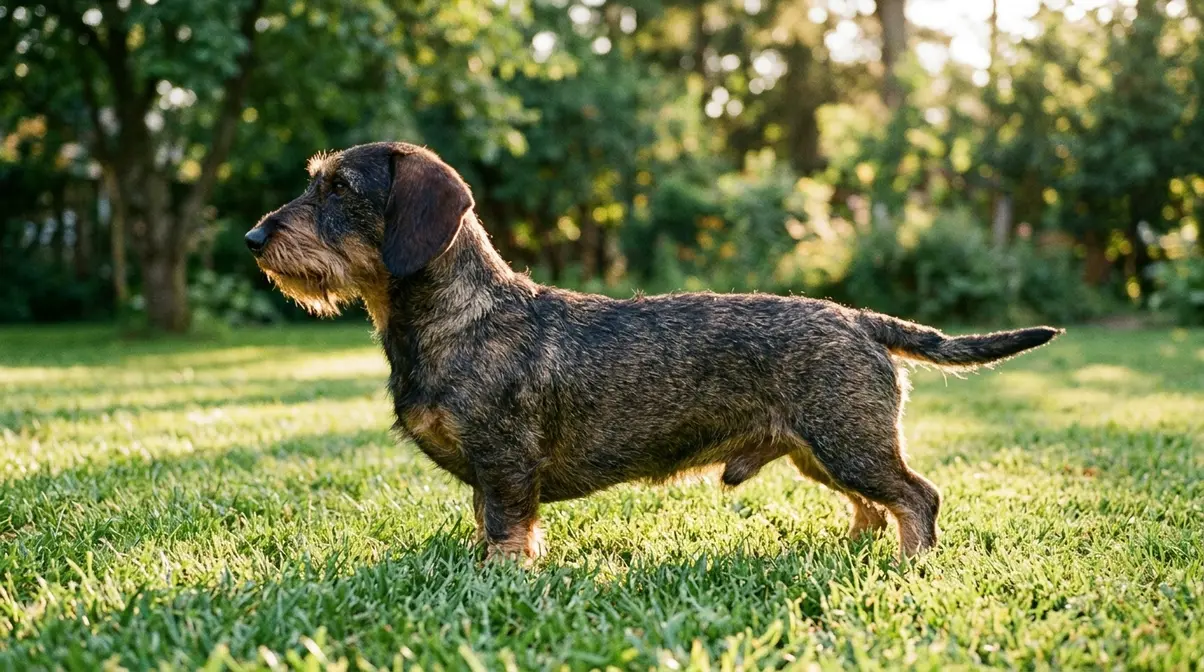
Both statements can be true at once. A breed can have a normal overall illness rate and still carry one or two weak points that show up more often than in other dogs. For the dachshund, that weak point is the spine. Most miniature dachshund health issues you will read about trace back to that long, low build, plus the knock-on effects of weight and age.
Picture an owner with a sick older dog who wonders if the breed is simply unlucky. The honest answer has two halves. Dachshunds are not a uniquely fragile breed by the general numbers. But their shape does put a specific, well-documented strain on the back. So miniature dachshund common health problems are not a long list of random bad luck. They cluster around the spine, the joints, the teeth and the ordinary illnesses of ageing.
This section sets up three parts. First, how breed risk differs from general illness rates. Second, the illnesses that come up most. Third, how long dachshunds live and when a dog counts as old. After that, the guide moves to the biggest risk: IVDD.
A fair warning about the evidence. No source here ranks every dachshund problem by how often it happens. What follows is a map built from what the sources do support, with general guidance filling the gaps and labelled as such. Treat it as a way to know what to watch for, not a prediction for your own dog.
Breed Risk Versus General Illness Rates
Dachshunds are not proven to be less healthy than other breeds, and the evidence we have is general. The Dog Aging Project data is owner-reported, covers dogs of every kind, and found that a higher proportion of purebred dogs than mixed-breed dogs had no owner-reported medical conditions (Frontiers in Veterinary Science, hosted by PubMed Central (PMC), 2023). It says nothing specific about dachshunds. PetMD, meanwhile, calls the breed susceptible to several conditions over a lifetime (PetMD).
Owner-reported data has limits. People may miss mild problems or label them differently, and a survey cannot replace a vet exam. So the finding is best read as a reason not to panic about breed reputation, not as proof your dog will stay healthy.
The spine still sets the breed apart. A long back carried on short legs puts the discs under steady strain, and no general statistic cancels that out. A reader on reddit describes an older dachshund facing a run of health problems, starting with a dental cleaning that was expected to be easy (source). Stories like that feel heavy, and they are common among owners of older dogs. They do not show that the breed is doomed.
The practical lesson: be calm about the overall picture and alert about the back.
Most Common Illnesses and Causes of Death
IVDD is the most common breed-specific illness, and the numbers show why. The American College of Veterinary Surgeons estimates that dachshunds account for 40 to 75% of all IVDD cases (Cornell University College of Veterinary Medicine). In plain terms, if a vet sees a dog with disc disease, there is a good chance it is a dachshund.
Other frequent conditions are covered in later sections: weight gain and obesity, knee and hip trouble, dental disease, eye problems, and hormone and heart disease in older dogs. Cancer can happen in any dog, but no source here gives a breed rate.
What about causes of death? No supplied source ranks them for dachshunds, so this guide will not guess. If you are asking because you are worried about an older dog, the useful step is a senior check-up with your vet, who can look at your dog’s own history.
Life Expectancy and When a Dachshund Counts as Old
The typical dachshund lifespan is a long one for a dog, according to PetMD (PetMD). That is about average for a smaller dog breed.
Owners sometimes expect more. A dog at nine can already have dental trouble, stiff joints or other age-related issues, and an owner who expected a much longer life may read that as early decline. The quoted range and the owner’s expectation simply do not match, and the source cannot settle which dog is “old.” Whether nine counts as old for your dog is a question for your vet, who can judge from exam findings.
If you want a look at how another coat pattern fares, see typical dapple lifespan and health issues. For any older dog, ask about dental care and age-related checks, and confirm with your vet.
IVDD: Causes, Early Signs, Age and Stages
Dachshunds account for 40 to 75% of all IVDD cases, according to an American College of Veterinary Surgeons estimate (Cornell University College of Veterinary Medicine). IVDD is a disc problem in the long spine, and it is the leading breed risk. Use the checklist below, and see a vet immediately if your dog shows weakness or paralysis.
Disc disease is seen most commonly in short-legged breeds, with the dachshund named first (UC Davis School of Veterinary Medicine, 2018). The cause is mostly structural. The spine is long, the legs are short, and the discs take repeated load over the years. Over time a disc can harden, weaken and then bulge or burst toward the spinal cord. Jumping, rough landings and extra weight do not create the weak spot, but they add stress to it. For a closer look at why the build works this way, see why the long back is built this way.
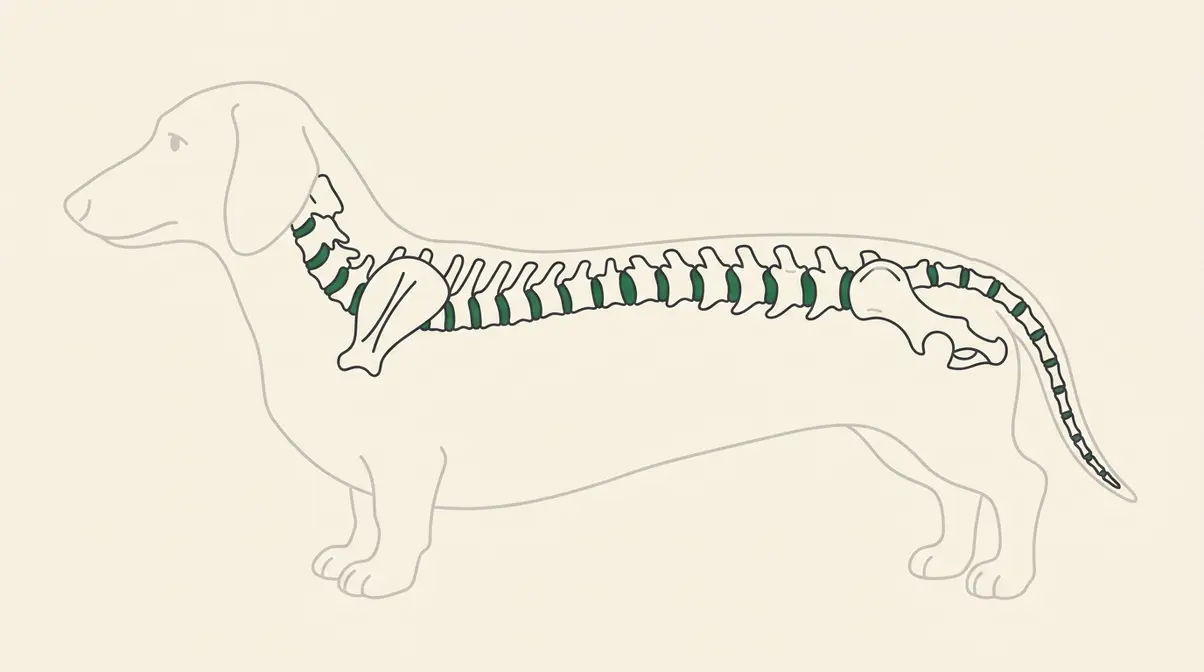
Early signs checklist. Not every dog shows all of these, and a vet must confirm the cause:
- Back or neck pain: yelping when lifted, a hunched posture, shaking or trembling.
- Reluctance to jump, climb stairs or get on the sofa.
- Wobbling or an unsteady, drunken walk in the back legs.
- Dragging or knuckling the back paws.
- Sudden weakness or inability to use the back legs.
Weakness, dragging paws or paralysis means go to the vet now, not tomorrow. Do not wait to see whether it passes. A dog that seems mostly fine again can still have a disc problem.
Picture a dog that hesitates on the stairs and yelps when you scoop it up. That is exactly the moment to book a vet exam, and to keep the dog calm and restricted from jumping until then. Another reader on reddit describes a 3.5 years old dapple showing back leg discomfort (source). The owner went straight to the vet, who said the dog had passed the physical testing, and the owner was left with questions. That shows how fuzzy early signs can be, and why a worried owner may need to push for follow-up.
Stages in general terms. Vets often describe IVDD as a ladder. At the bottom is pain only, with a stiff or cautious dog. Next comes wobbling and weakness. Further up the dog cannot walk. At the far end the dog is paralysed and may lose the feeling in its toes and legs. The end stage is an emergency, and outcomes depend heavily on how fast a vet sees the dog. Scales vary between vets, so ask which one yours uses.
| Condition | Early signs | Urgency | Outlook |
|---|---|---|---|
| IVDD | Back pain, reluctance to jump, wobbling, dragging paws, sudden weakness; may appear from 3 to 6 years of age (Cornell University College of Veterinary Medicine) | Weakness or paralysis: see a vet immediately | Depends on how severe the nerve loss is; see the outcomes section |
| Other conditions (joint, dental, eye, hormone, heart) | Stiffness, bad breath, squinting, more drinking, coughing | Vet exam soon; sudden or severe changes sooner | Varies by condition; a vet exam sorts it out |
First Signs of IVDD and When to Go to the Vet Now
Go to the vet now if your dachshund shows sudden weakness, drags a back paw, cannot stand, or cries out in pain. Call ahead so the clinic can prepare. Short-legged breeds like the dachshund are the dogs most commonly affected by disc disease, so the risk is real for your dog even if it looks well today (UC Davis School of Veterinary Medicine, 2018).
Fluff & Zoomies on YouTube cautions that the long spine makes dachshunds prone to back issues, especially IVDD. That is one practitioner’s view, but it matches the general pattern.
Use this go-now list:
- A back paw that drags or knuckles over, especially if it starts suddenly.
- Wobbling, falling or crossing the back legs.
- Crying out when touched or lifted, or refusing to move at all.
- Loss of bladder or bowel control.
- Not walking, or not feeling the toes.
Imagine a dog that drags a back paw at night. Do not wait for morning to see whether it improves. Keep the dog still, carry it with support under chest and rear, and call an emergency vet. The urgent signs are the obvious ones, but do not wait for them. A dog that hesitates, hunches or cries is already telling you something.
Age of Onset, Prone Breeds and the Stages of IVDD
Dogs may be clinically affected by IVDD from 3 to 6 years of age (Cornell University College of Veterinary Medicine). That is young adulthood, not old age, so a stiff or slow dachshund at four is worth a vet visit. Disc disease occurs in dogs of any age or breed, but it is seen most commonly in short-legged breeds, and other small breeds can be affected too (UC Davis School of Veterinary Medicine, 2018).
A young adult dog that turns stiff and slow might look like it is just tired. One reader on reddit says their dog Penny got IVDD at 4. They noticed she was stiff and slow moving and took her to the vet, who talked about stages 1-4 and thought she was likely at stage 1. That is one owner’s account, not a rule, but it shows how a mild-looking dog can still have an early-stage problem.
In general terms, early stages mean pain and caution. Middle stages mean weakness and trouble walking. The end stage means the dog cannot walk and may have lost deep feeling in the legs, which is why speed matters. Stage definitions differ between vets and no source here fixes them, so ask your own vet which scale they use and what your dog’s stage means.
Can Dogs Die or Recover From IVDD, and What Does Treatment Cost?
Dogs that can still feel their toes have a 90 percent chance of walking again, according to PetMD (PetMD). The chance falls to 50 percent once a dog has a level five back problem (PetMD). So yes, many dachshunds recover, and yes, severe cases can end badly. Recovery odds depend on how much feeling is left, which is why prompt vet assessment matters so much.
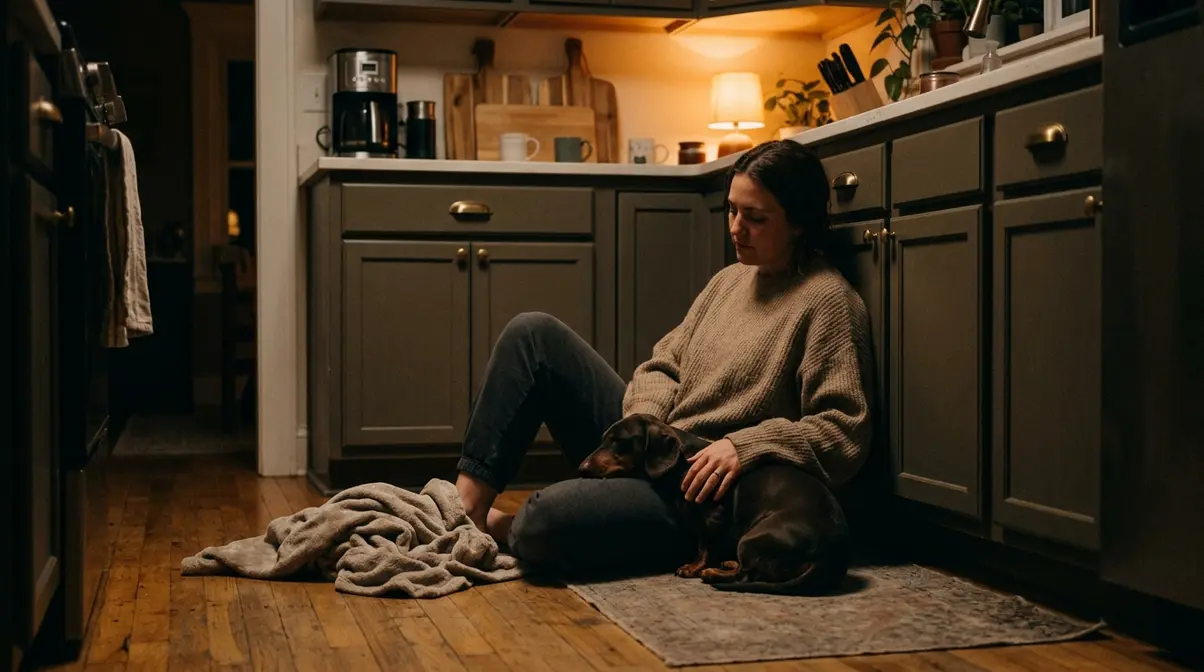
Why does speed help? A disc that presses on the spinal cord can damage nerves more the longer it presses. The less damage, the better the chance of recovery. That is not a promise for any one dog, only the logic behind the urgency.
Treatment falls into two broad paths. Conservative care usually means strict crate rest, pain relief and anti-inflammatory medicine as your vet directs, often for several weeks. Surgery removes the disc material pressing on the cord and tends to be considered when a dog has lost the ability to walk or when conservative care fails. Which path fits depends on severity, and only your vet can say.
Can dogs pass away from IVDD? Severe cases can be life-threatening, and some owners face euthanasia as a quality-of-life decision. That discussion belongs with your vet, not in a search result.
Picture an owner facing a large quote. The number is frightening, but the decision does not have to be made alone or in a panic. Ask for an itemised estimate, ask what the recovery odds are for your dog’s level, and ask what happens if you choose conservative care first.
No surgery price appears here because no verified figure was found, and costs vary by region and clinic.
Surgery Cost Versus Conservative Care
IVDD surgery costs vary widely, and the right number has to come from your vet. This guide has no verified price, so it gives none. What it can tell you is that recovery odds vary with how much feeling remains, which shapes whether surgery is recommended (PetMD).
Imagine an owner comparing a clinic estimate with a monthly budget. Before deciding, ask the vet to itemise the quote: exam, imaging, surgery, hospital stay, medication and rehab. Ask whether conservative care is a reasonable first step for your dog’s severity, and what the signs are that it is not working.
Also ask about follow-up costs. Recovery can mean weeks of crate rest, medication and sometimes physical therapy. A good vet will talk through these without pressure, and you can ask for a second opinion if you need one. Pet insurance, if you have it, may change the picture, so check your policy early.
Euthanasia: When It Is Considered
Euthanasia is a vet-guided decision, and there is no single right answer. The recovery chance falls to 50 percent at the most severe level, which is one reason some owners face the question (PetMD). This guide offers no verdict.
Picture a dog that cannot walk, with pain control still uncertain. Owners in that spot often feel they must decide immediately. You can take a breath and ask your vet questions first:
- What are my dog’s realistic odds at this level of nerve loss?
- Can pain be controlled well, and for how long?
- What would daily care look like if my dog does not walk again?
- Is my dog eating, resting and showing interest in family life?
- What would you do in my place, knowing my dog?
These questions focus on comfort and quality of life, not on guilt. Whatever you choose, a thoughtful decision made with your vet’s honest input is an act of care.
Joint Problems and Obesity: How Weight Adds to Spinal Risk
Your dachshund jumps up onto the couch, and you notice the belly brushing the cushion. Excess weight adds load to the back and the joints, which is the last thing a long spine needs. A survey of 11 European countries found that 30-70% of companion dogs were overweight, so extra weight is common in dogs generally (Acta Veterinaria Scandinavica, hosted by PubMed Central (PMC), 2021). That makes it easy to miss in your own.
Weight matters for dachshunds because of leverage. A long back is a long lever. More body mass means more force on each disc with every jump, twist and landing. The same extra weight also loads the hips and knees, which can make existing joint trouble more painful. No source here gives a dachshund obesity rate, so this guide does not claim one.
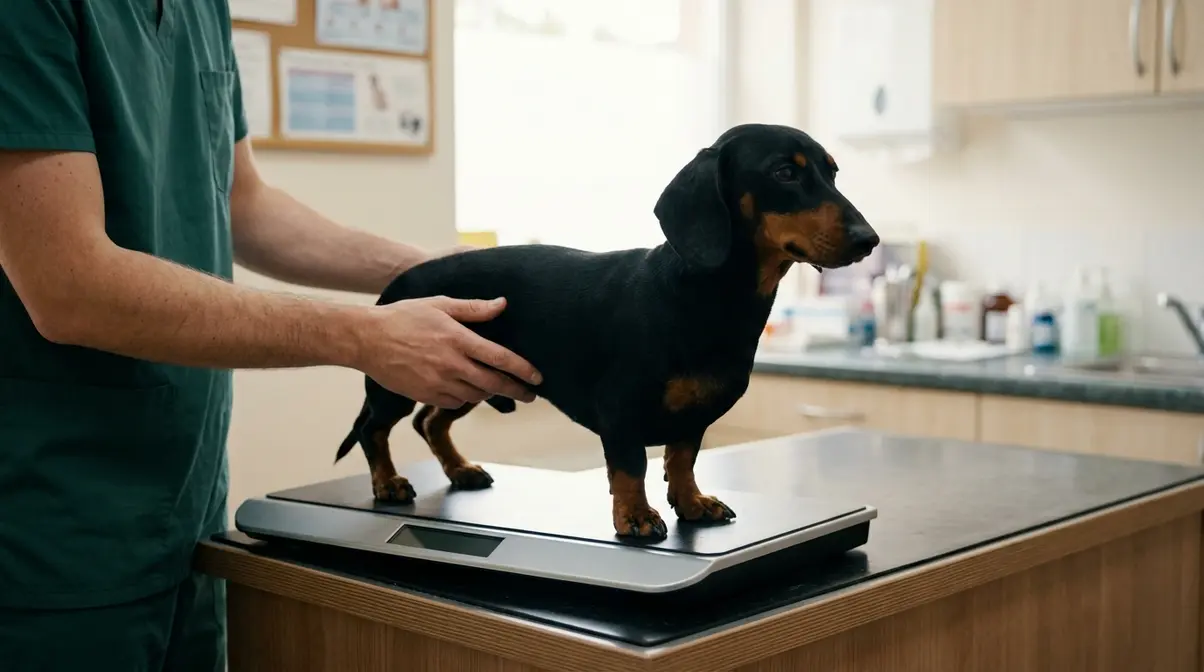
Think of a couch-potato dachshund that gains a little each year. No single year looks like a problem, but five years of small gains add up. A reader on reddit describes a standard, neutered, mostly couch-potato dog with a couple of walks a day. That kind of routine is common, and it shows how easily a calm home life slides into slow weight gain.
Joint signs to raise with your vet:
- Stiffness after resting, especially in the morning.
- Reluctance to jump, climb or play.
- A skipping or hopping step on a back leg.
- Licking or favouring a joint.
- Slowing down on walks.
Are dachshunds in pain? They can be, and they often hide it. Pain signs include panting at rest, a hunched back, trembling, yelping when touched, restlessness at night, loss of appetite and hiding. Any of these deserves a vet visit, since pain can come from the spine, the teeth, the joints or elsewhere. Do not give human pain medicine, which can be dangerous to dogs.
Regular weigh-ins and a hands-on check are a good habit. Your vet can tell you whether your dog’s weight is in a healthy range.
Obesity and Weight Control
Weight matters because every extra pound adds strain to a spine that is already built for stress. A survey of 11 European countries found that 30-70% of companion dogs were overweight (Acta Veterinaria Scandinavica, hosted by PubMed Central (PMC), 2021). The practical meaning for you is that excess weight is a common problem, not a personal failing, and it is one of the few risks you can change.
Try a rib check during a cuddle. Run your hands along your dachshund’s sides. You should feel the ribs under a thin layer, without pressing hard. If you cannot feel them, your dog may be carrying extra weight. Look from above too: there should be a gentle waist behind the ribs, and from the side the belly should tuck up, not hang.
Ask your vet to score your dog’s body condition and suggest a target. Prevention detail, including measured meals and treat limits, comes later in the guide.
Knee and Hip Trouble to Raise With Your Vet
Skipping, hopping or stiffness in the back legs justifies a vet visit. Hip dysplasia is a common inherited condition where the hip forms incorrectly, causing laxity, then arthritis, pain and discomfort (Cornell University College of Veterinary Medicine, 2026). Luxating patella, a slipping kneecap, has no kept source here, so this is general guidance with no figures.
Signs worth raising with your vet:
- A skipping gait on a back leg, where the dog hops for a few steps and then walks normally.
- Stiffness after rest, or slowness getting up.
- Reluctance to jump, climb stairs or play.
- A “bunny hop” way of running, with both back legs moving together.
- Pain or yelping when a hip or knee is handled.
Imagine a dog that briefly hops on one back leg during a walk, then carries on as if nothing happened. It is tempting to wait and see. But intermittent signs still matter, because the problem can worsen. A vet exam, and sometimes imaging, is how a knee problem gets told apart from a hip problem or a spinal one. A vet can also check whether pain in the back legs is actually coming from the spine.
Other Conditions: Cushing’s, Thyroid, Heart, Dental, Eyes and Cancer
Your older dachshund starts drinking more, pants at night and has a patchy, thin coat. Older dachshunds can have several non-spinal conditions at once, and a vet exam sorts out which signs belong to which problem. No figures are given here because no source supports breed rates for these conditions, so this section is plain-language guidance only.
| Condition | Plain signs | When to see a vet |
|---|---|---|
| Cushing’s disease | More drinking and urinating, panting, pot belly, thin coat, skin problems | Book an exam if you notice these signs; sooner if your dog seems unwell |
| Thyroid problems | Weight gain, sluggishness, dull coat, skin trouble, feeling cold | Book an exam; blood tests are needed |
| Heart disease | Coughing, tiring on walks, fast or laboured breathing, fainting | See a vet soon; laboured breathing or collapse is an emergency |
| Dental and gum disease | Bad breath, tartar, red gums, drooling, dropping food, face pain | Book a dental check; sooner if your dog stops eating |
| Eye problems | Squinting, redness, cloudiness, discharge, bumping into things | Same day for sudden pain or cloudiness; otherwise book soon |
| Cancer | New or growing lumps, weight loss, sores that do not heal | See a vet for any new lump; no breed rate is claimed here |
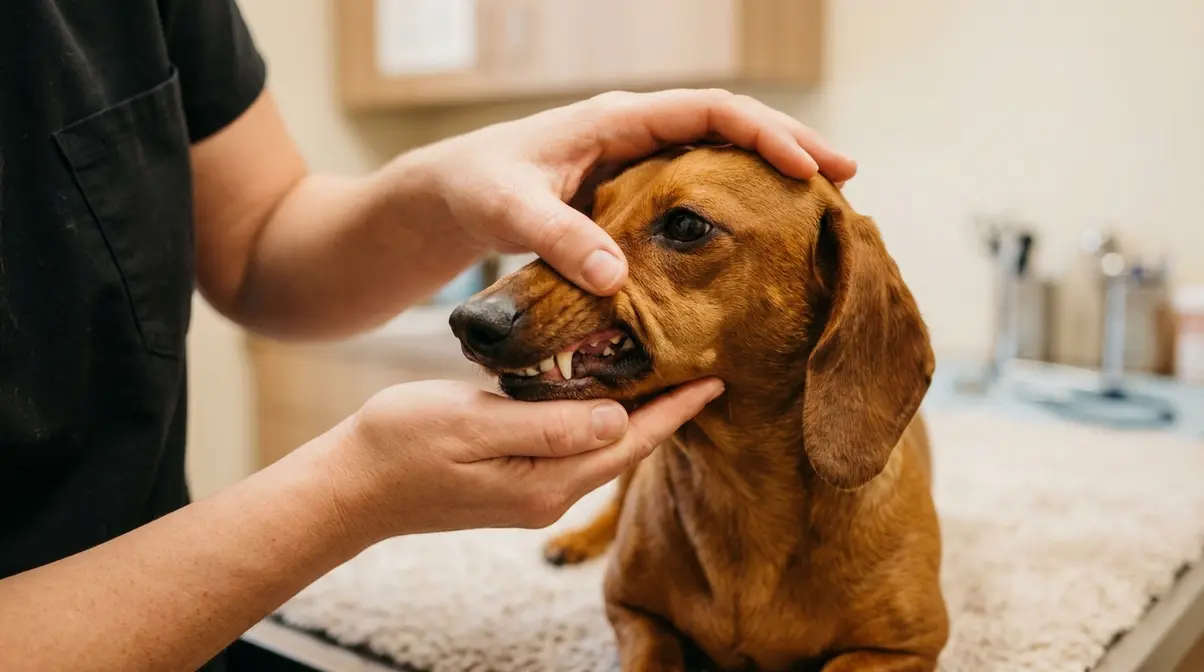
Dental and gum disease. Dental disease is common in small dogs, and bad breath is often the first clue. Pain can make a dog drop food or avoid hard kibble. Ask your vet about dental checks and cleanings.
Eye problems. Squinting, redness or a cloudy look should be checked quickly, since eyes can worsen fast. For coat-specific eye and hearing risks, see eye and hearing problems in dapples.
Cushing’s, thyroid and heart disease. These are hormone and heart conditions, and they tend to appear in middle-aged and older dogs. Signs overlap with normal ageing, which is why blood tests and exams matter. Heart disease often shows as coughing or tiring easily, and trouble breathing is urgent.
Ears and skin. Head shaking, scratching or a smell from the ear may point to a dog ear infection, and a vet can check and treat it. Hereditary conditions that depend on coat colour are covered in their own guide, such as hereditary conditions in blue dachshunds.
Cancer. Any dog can develop it. No breed rate is claimed here. Have your vet look at any new lump, even a small one. Many lumps are harmless, but only testing can tell.
A tidy habit helps: write down what you notice, with dates, and bring the notes to your vet. A pattern of small changes often tells the story better than any one sign.
Prevention: Weight, Spine Protection and Daily Care
A few steady habits protect a dachshund’s back better than any single product. The plan below targets weight, jumping, lifting and daily care. No figures are given, because no source here supports weight targets or specific numbers, and weight and nail advice is general guidance. Check details with your vet.
Picture a dog that begs after every meal. Those eyes are hard to resist, but begging is not the same as hunger. Follow this plan:
- Measure every meal. Use a measuring cup or a kitchen scale, and ask your vet how much your dog should eat. Do not free-feed from a full bowl.
- Count treats. Take treat calories out of the daily food. Use small pieces, or offer a few kibbles from the daily portion as rewards.
- Make meals feel bigger. Use a slow-feeder bowl or a puzzle toy so the same food lasts longer, which helps a dog that acts starved.
- Stop jumping from furniture. Fluff & Zoomies on YouTube advises not letting dachshunds jump off furniture. VitalPet on YouTube notes that you get used to constantly lifting the dog down rather than letting it jump off like a golden retriever would.
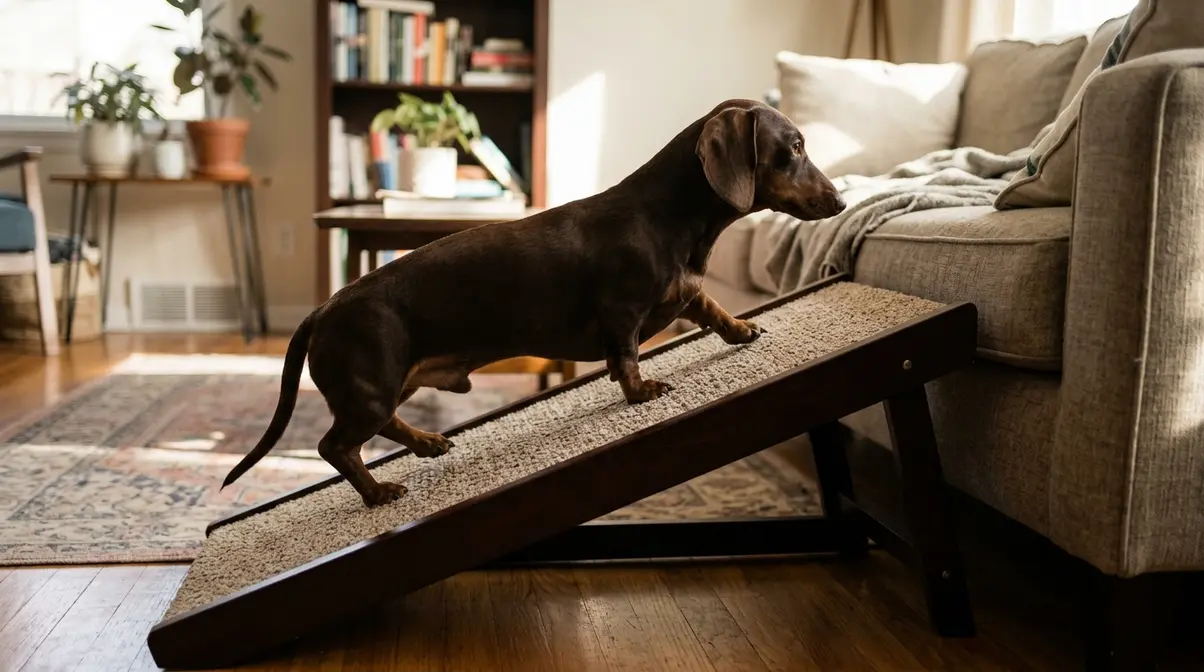
- Use ramps or steps. Put a ramp or pet steps at the couch and bed so your dog can climb without leaping.
- Lift with support. Fluff & Zoomies on YouTube says to always support the chest and rear when carrying. Slide one hand under the chest and the other under the hindquarters so the spine stays level.
- Use a harness, not a collar. A well-fitted harness spreads pressure across the chest and keeps strain off the neck during walks.
- Keep nails short. Long nails change how a dog stands and walks. Trim regularly or ask your groomer or vet.
- Keep a steady routine. Daily walks, calm play and a non-slip floor all help. Put rugs or runners on slippery floors.
- Weigh monthly. Track the number and take it to vet visits.
The tips from practitioners are one voice each, not proof, but they match common sense. For everyday habits that keep the spine safe, see spine-safe habits for everyday life.
The best prevention is boring and consistent. A dog that stays lean, climbs ramps and gets lifted correctly gives its spine the best chance. It cannot guarantee that IVDD never happens, but it reduces the stress on the discs.
Coping With a Sick Dachshund
You sit on the kitchen floor at midnight, a pile of vet papers next to a dog who will not eat. If you feel overwhelmed, you are in good company. Many owners feel stretched thin when a dachshund gets an IVDD diagnosis or several illnesses at once, and that is a normal response to a hard situation. This section offers general guidance only.
Coping with an IVDD diagnosis. Start by getting the facts from your vet: what stage your dog is at, what treatment is advised, and what recovery looks like. Write the answers down. Ask for a plan in steps so the problem feels smaller. Strict rest is hard on a lively dog and on its owner, so plan the weeks ahead: a crate or pen in a quiet room, a schedule for medicine, and someone to share the work when you need a break.
Living with several illnesses. A list of conditions can feel endless. Ask your vet which problem matters most right now, what can wait, and what changes would be an emergency. Keep a simple notebook with medicine times, appetite, mobility and mood, and bring it to appointments. One page of clear notes beats trying to remember everything under stress.
Where to find support. Your vet team is the first stop, including vet nurses, who often have practical tips on lifting, bladder care and rest. Breed clubs and owner support groups, online or local, can offer company and ideas from people who have been there. Peer stories can comfort you, but they are not medical advice for your dog.
What to ask your vet. How can I keep my dog comfortable? What signs mean I should call you right away? What can I do at home to help? What costs should I expect?
This guide gives no mental-health advice. If the strain is affecting your own wellbeing, talk with your doctor or a qualified professional. Caring for a sick dog is hard, and asking for help is part of doing it well.
Is It Cruel to Breed Dachshunds?
No review issues a verdict on dachshunds specifically, but one review does call appearance-only breeding for profit abuse. It states that “Breeding dogs solely for their physical appearance in order to increase profits is itself a real form of animal abuse” (Animals (Basel), hosted by PubMed Central (PMC), 2024). That is a general statement about breeding practices, not about the breed.

A prospective owner who worries the breed is cruel is asking a fair question. The honest answer sits between two extremes. Breeding dachshunds is not automatically cruel, but breeding without care for health, or for looks and profit alone, is a real concern. Responsible breeders health-test their dogs, think about the spine and weight, and are open about problems in their lines.
If you are choosing a puppy, ask the breeder what health checks the parents have had, how they screen for back problems, and whether they will share vet records. A breeder who dodges those questions is a warning sign. Then build a home that protects the back: ramps, weight control and sensible handling.
This section is a short overview. The questions of why dachshunds are sometimes called a “worst breed,” and whether they are good dogs, are covered on their own pages.
What the Ethics Review Says About Appearance-Only Breeding
The review’s position is blunt: “Breeding dogs solely for their physical appearance in order to increase profits is itself a real form of animal abuse” (Animals (Basel), hosted by PubMed Central (PMC), 2024). Its limit matters just as much. It is a general statement about breeding for looks and profit, not a finding about dachshunds in particular, and it does not say that every dachshund breeder behaves this way.
Imagine a buyer comparing two breeders. One advertises a rare colour and a quick sale. The other asks questions about your home, shares health records and has no waiting-list pressure. The review’s logic points toward the second. Prefer breeders who put health ahead of fashion.
What Health Data Says About Purebred Dogs
Purebred dogs did not show higher lifetime prevalence of medical conditions than mixed-breed dogs in the Dog Aging Project (Frontiers in Veterinary Science, hosted by PubMed Central (PMC), 2023). That is a useful answer for a sceptic who says purebreds are always unhealthy.
The finding has limits. It is owner-reported and general, covering many breeds. It does not erase the dachshund’s breed-specific spine risk, which comes from its build and is documented separately. Both can be true: purebreds as a group are not shown to be sicker, and one particular breed can still have a well-known weak spot. Use the finding to stay calm, not to relax about the back.
Why the Dachshund’s Build Is the Sticking Point
The long-backed build is the main concern because disc disease is most commonly seen in short-legged breeds, including the dachshund (UC Davis School of Veterinary Medicine, 2018). The shape that makes the breed so recognisable also places steady strain on the spine.
A prospective owner weighing the risk should keep it in proportion. Many dachshunds live long lives without serious back trouble, and daily habits lower the odds of strain. But the risk is real, and it is built into the body. So choose a breeder who health-tests and discusses back problems openly, and plan a home that protects the spine from day one: ramps, lean weight and careful lifting. This is general guidance, not a claim about any one breeder.
When Home Care Is Not Enough: Limits of This Guide
Call a vet when your dachshund shows sudden weakness, cannot use its back legs, cries out in pain, or stops eating. This guide is general information, written by Bobbie Terry, Editor, who is not a veterinarian, and it has not been vet-reviewed. Individual dogs vary, and no article can examine your dog.
Use this checklist to decide when to stop reading and call:
- Sudden weakness or paralysis. If your dog suddenly cannot use its back legs, go to an emergency vet immediately.
- Back pain that lingers. Waiting on back pain is a common pitfall. A dog that yelps, hunches or refuses stairs needs an exam.
- Guessing at symptoms. Several conditions share signs, such as stiffness, tiredness and heavy drinking. A vet can test, and a search cannot.
- Loss of bladder or bowel control. This can signal nerve involvement and needs prompt care.
- Laboured breathing, collapse or a swollen belly. Treat these as emergencies.
Imagine a dog that suddenly cannot use its back legs. There is nothing to read or try first. Carry the dog carefully with chest and rear support, call ahead and go.
Another limit: the sources here are general. For example, the lifespan range quoted from PetMD, 12 to 16 years, will not match every owner’s expectation or every dog’s life (PetMD). Treat ranges as guides, not promises.
An exam is the right approach whenever the signs are new, severe or unclear. Home care, such as weight control, ramps and careful lifting, supports a vet’s plan. It does not replace one.
Next Steps
Here is a short list you can act on this week:
- Book a vet check for any warning sign. Weakness, dragging paws, back pain, stiffness, heavy drinking, a new lump or squinting all deserve an exam. Do not wait for the signs to become obvious.
- Weigh your dog and check the ribs. Write the number down, and ask your vet for a target and a body condition score at the next visit.
- Start the prevention plan. Measure meals, count treats, put a ramp at the couch and bed, and lift with chest and rear support every time.
- Make the home back-friendly. Add rugs on slippery floors, trim nails and use a harness for walks.
- Write down questions for your vet. Include dental care, senior checks, and what signs would count as an emergency for your dog.
- Follow the deeper guides. The linked pages on lifespan, eye and hearing risks, coat-linked conditions and daily spine care go further than this overview.
You do not need to do everything at once. Pick the two or three steps that fit your dog today, and add more over time. A calm owner who watches the back, controls the weight and acts quickly on warning signs gives a dachshund its best chance at a long, comfortable life.
FAQ
What is the life expectancy of a Dachshund?
The typical dachshund lifespan is 12 to 16 years, which PetMD describes as about average for a smaller dog breed (PetMD). Individual dogs vary with genetics, weight, dental care and spine health. Ask your vet what a healthy path looks like for your own dog.
What is the most common illness in Dachshunds?
IVDD is the most common breed-specific illness. The American College of Veterinary Surgeons estimates that dachshunds account for 40 to 75% of all IVDD cases (Cornell University College of Veterinary Medicine). Other frequent problems include weight gain, joint trouble and dental disease, and your vet can tell you which matter most for your dog.
What is the most common cause of death for Dachshunds?
No supplied source ranks causes of death for dachshunds, so this guide does not name one. Serious spinal disease and ordinary age-related illness both matter. The most useful step is regular vet check-ups, especially in later life, so problems are caught early.
What are the first signs of IVDD in Dachshunds?
Early signs include back or neck pain, reluctance to jump or climb, wobbling and dragging paws. Disc disease is seen most commonly in short-legged breeds like the dachshund (UC Davis School of Veterinary Medicine, 2018). Any sudden weakness means a vet visit now, since only an exam can confirm the cause.
At what age do most Dachshunds get IVDD?
Dogs may be clinically affected by IVDD from 3 to 6 years of age, according to the American College of Veterinary Surgeons estimate (Cornell University College of Veterinary Medicine). That is young adulthood, so a stiff or reluctant dachshund in that range deserves a vet exam. It can appear at other ages too.
Can dogs pass away from IVDD?
Severe IVDD can be life-threatening, though many dogs recover. PetMD reports that dogs that can still feel their toes have a 90 percent chance of walking again, falling to 50 percent at level five (PetMD). Quick vet care improves the odds, and your vet can explain your dog’s level.
Is it best to put a dog down with IVDD?
There is no single right answer, and this guide offers no verdict. The decision depends on how severe the nerve loss is, how well pain is controlled and your dog’s quality of life. Talk it through with your vet, who can give honest odds and compassionate guidance.
What is the end stage of IVDD in dogs?
The end stage generally means the dog cannot walk and may have lost feeling in its back legs. No source here defines stages, so this is general guidance only. It is an emergency, and outcomes depend on speed. Ask your vet which scale they use and what it means for your dog.
What dog breed is most prone to IVDD?
The dachshund is the breed most associated with IVDD. Disc disease is seen most commonly in short-legged breeds, with the dachshund named first (UC Davis School of Veterinary Medicine, 2018). Other short-legged and some small breeds can be affected too, so watch the back in any dog built that way.
How much does IVDD surgery cost for a Dachshund?
No verified surgery price is available here, and costs vary by clinic, region and severity. Ask your vet for an itemised estimate covering exam, imaging, surgery, hospital stay, medicine and rehab. Also ask whether conservative care is an option for your dog, and what each path would involve.
