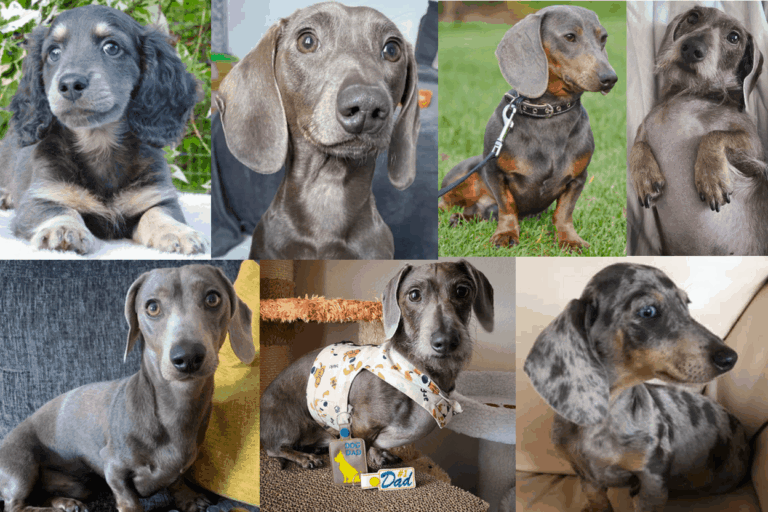
You’ve fallen for the long-bodied, short-legged charm of the short hair dachshund. But before you bring one home, there are a few things most breed guides won’t tell you.
The spine that needs protecting from day one. The stubborn streak that surprises first-time owners who expected a compliant little lap dog. The lifetime cost that adds up faster than most people budget for. Generic kennel club profiles give you the highlights, loyal, affectionate, great watchdog. What they skip is the honest picture that helps you decide with your eyes open.
This guide covers everything: temperament and training realities, grooming and spine-safe habits, size comparisons, color variety, and a real cost breakdown from puppy price to lifetime estimate. By the end, you’ll have everything you need to run through The Honest Dachshund Checklist, and know whether this breed is genuinely right for you.
The short hair dachshund is a loyal, spirited companion, but owning one requires honest preparation.
- Spine health is non-negotiable: Dachshunds account for 40-75% of all IVDD cases in dogs, according to estimates cited by Cornell University College of Veterinary Medicine, ramps, weight management, and limited jumping are essential from day one.
- Expect stubbornness: The “typical dachshund attitude” is real, patient, consistent positive training works; punishment does not, and can trigger defensive reactions.
- Grooming is low-maintenance: Weekly brushing with a rubber curry brush or deshedder handles the smooth coat easily; their back health demands far more attention than their coat does.
- Budget carefully: The ASPCA pet cost data estimates total first-year ownership costs for a small dog at approximately $3,221, with annual ongoing costs around $1,391, not including emergency veterinary care.
- The Honest Dachshund Checklist: Before committing, run through all four pillars, costs, spine safety, temperament realities, and training commitment. This guide covers each one honestly.
Table of Contents
- What Is a Short-Haired Dachshund?
- What Temperament Should You Expect?
- Grooming and IVDD Prevention
- Short-Haired vs. Long-Haired Dachshund Comparison
- Miniature vs. Standard Short-Haired Dachshund
- Short-Haired Dachshund Colors and Patterns: A Quick Guide
- How Much Does a Short-Haired Dachshund Cost?
- Breeding Short-Haired and Long-Haired Dachshunds
- Frequently Asked Questions
- Before You Bring Home a Short-Haired Dachshund
What Is a Short-Haired Dachshund?
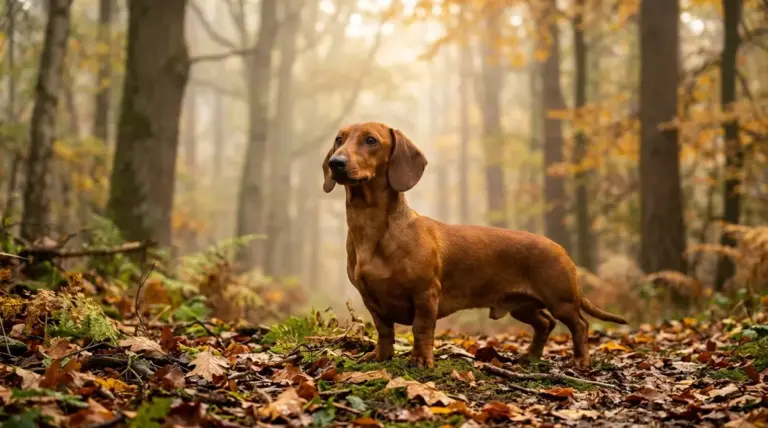
The short hair dachshund, also called the smooth-coated or smooth dachshund, is the original variety of the breed, recognized by the American Kennel Club in two sizes: standard (16-32 lbs) and miniature (under 11 lbs). The smooth coat is dense, short, and shiny, lying flat against the body. What makes this variety particularly relevant to your decision is a detail most breed profiles skip entirely: the same physical build that made dachshunds exceptional hunters is the exact reason their spines need active, lifelong management.
That connection, between form and vulnerability, runs through everything in this guide.
The Smooth Coat Explained: Looks, Size, and Build
The short-haired dachshund’s coat is dense, smooth, and shiny, lying flat against the body with no feathering or wiry texture. Owners in the breed community sometimes describe it as “course”, meaning the smooth coat feels firm and close rather than soft and fluffy. No trimming is required, and the coat naturally repels light dirt.
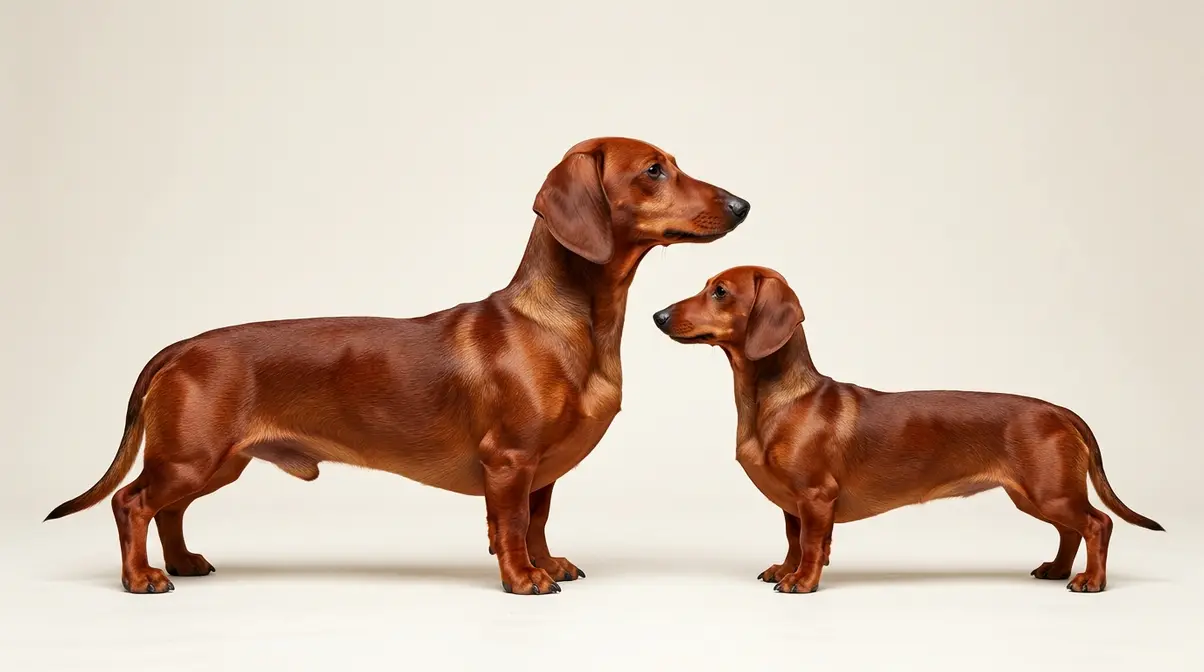
The body proportions are distinctive: a long spine, deep chest, and short but muscular legs. According to the American Kennel Club, standard dachshunds weigh 16-32 lbs and stand 8-9 inches at the shoulder; miniature dachshunds weigh under 11 lbs and stand 5-6 inches tall. The miniature dachshund short hair variety is particularly popular for apartment living. Note that “toy” and “teacup” labels are not AKC-recognized size classifications, they are marketing terms often associated with irresponsible breeding practices.
The three coat varieties, smooth, long-haired, and wire-haired, are all the same breed. This article focuses on the smooth (short-haired) coat, but all three share the same elongated body structure and the same IVDD risk. That low-to-the-ground silhouette wasn’t designed for aesthetics. It was engineered for underground work.
That distinctive long-and-low silhouette has a fascinating origin story, and understanding it helps explain both the breed’s strengths and its biggest health vulnerability.
A Brief History: From Badger Hunter to Family Dog
The dachshund was developed in Germany in the 17th century. The name itself tells you everything: Dachs means badger, Hund means dog. Every physical trait was intentional. Short legs kept the dog low to the ground and agile underground. The elongated body allowed it to fit inside badger burrows. A loud, resonant bark signaled the dog’s location to hunters above. Strong, paddle-shaped forepaws were built for digging.
The smooth (short-hair) dachshund short coat was the original variety. Long-haired dachshunds were developed later through crosses with spaniels, and wire-haired varieties came from terrier crosses. This history matters because it explains the temperament you’re about to read about in the next section, these dogs were bred to work independently, make their own decisions underground, and persist against prey that fought back.
The American Kennel Club recognized the dachshund in 1884, and today the breed consistently ranks among the most popular in both the US and UK. For the breed’s full history, see our dachshund breed history.
The hunting instincts are still very much alive in today’s short-haired dachshund, which brings us to the personality traits that define the breed.
Are Short-Haired Dachshunds Good Dogs?
Short-haired dachshunds are excellent dogs for the right owner. They are loyal, deeply affectionate with their families, surprisingly brave given their size, and genuinely intelligent. They make alert watchdogs, adapt well to apartment living with adequate exercise, and tend to form strong, lasting bonds with their people.
The challenges are just as real, though. Their independent hunting instinct translates directly into stubbornness, they will ignore a command if something more interesting is happening. They bark. A lot. Their prey drive means recall off-scent is genuinely difficult. And their back health requires ongoing, proactive management that some owners find more demanding than expected.
Best fit: patient owners who are consistent with training, willing to make spine-safe home modifications (ramps, no jumping), and present enough to manage separation anxiety. According to The Spruce Pets, dachshunds combine loyalty and intelligence with a stubborn, independent nature that requires a particular kind of owner to bring out the best in them. If you work long hours without a plan for your dog’s alone time, separation anxiety is a real and specific concern worth addressing before you commit.
Knowing whether a short-haired dachshund is right for you starts with understanding their temperament, and that means being honest about the “typical dachshund attitude.”
What Temperament Should You Expect From a Short-Haired Dachshund?
The short-haired dachshund is loyal, curious, and deeply bonded to its owner, but it also carries a bold, assertive streak that can catch first-time owners off guard. The key tension is this: you get a dog that is affectionate and devoted at home, but willfully independent the moment a scent trail or a squirrel enters the picture.
On the Honest Dachshund Checklist, temperament is where most first-time owners get surprised.
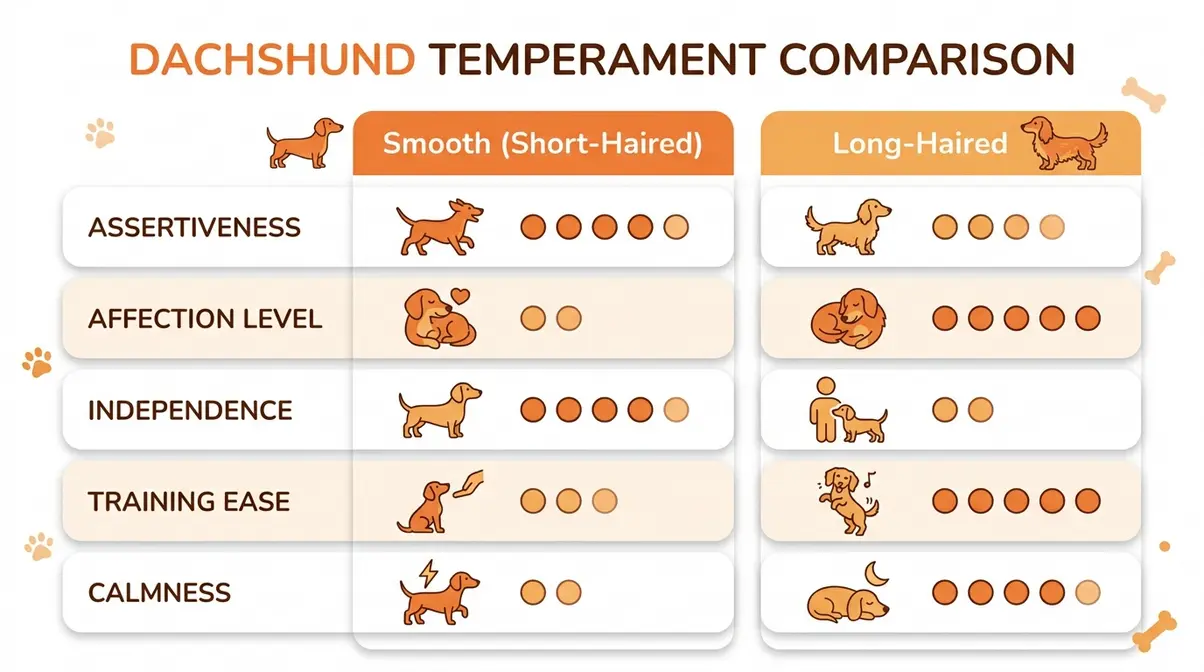
The community has captured something real about coat-type differences:
“Long hair dachshunds tend to be more gentle and cuddly than smooth coats, who are more likely to have the typical dachshund attitude.”
, Dachshund owner community consensus
For a specific coat variant, see our guide to exploring the temperament of dapple dachshunds, they share the smooth coat’s boldness with some additional pattern-specific considerations.
The “Typical Dachshund Attitude”: Stubbornness and Training
The typical dachshund attitude is not a flaw in the breed, it is the breed. Dachshunds were selectively bred for centuries to make independent decisions underground, without handler direction, in high-stakes situations. That instinct doesn’t switch off when your dog is in the living room. When your dachshund ignores the “come” command because it’s tracking a scent across the yard, it isn’t being defiant. It’s doing exactly what its genetics were built to do.
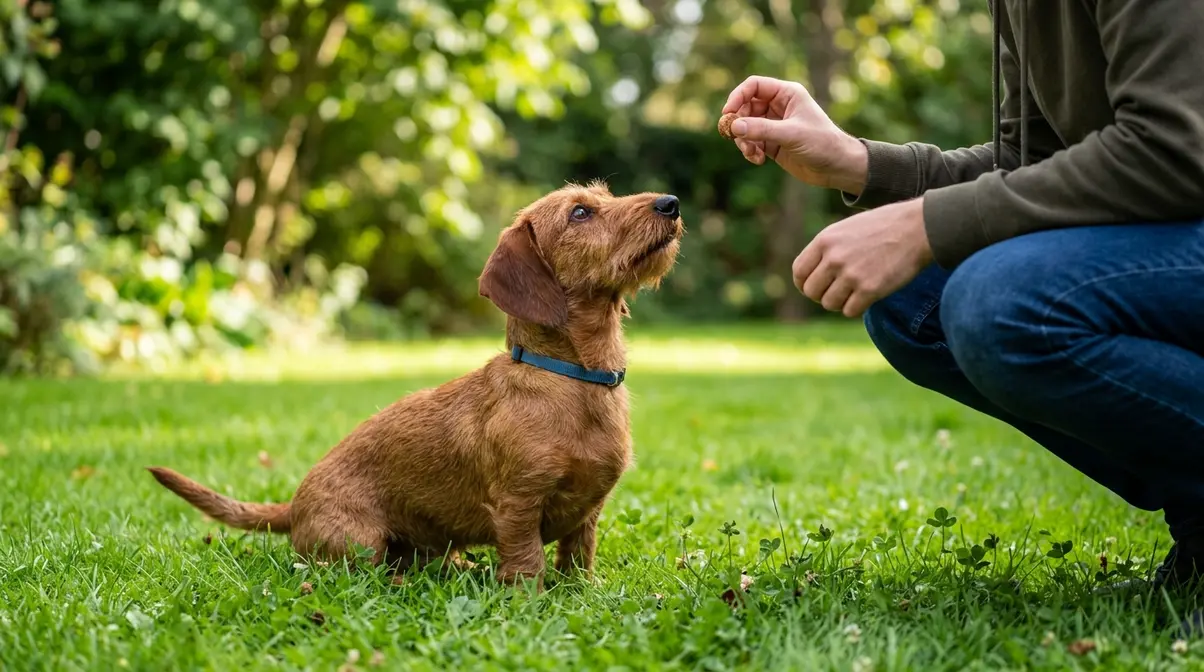
What actually works in training: short sessions of 5-10 minutes maximum, high-value food rewards (dachshunds are highly food-motivated), consistent commands used the same way every time, and genuine patience. The American Kennel Club specifically recommends patient, consistent positive reinforcement methods for the breed. Dachshunds respond well when training feels like a game with a reward at the end, they lose interest fast in repetitive drills with no payoff.
Three specific behaviors that challenge owners most:
- Recall off-scent: Once a dachshund has its nose on a trail, recall becomes genuinely difficult. Practice recall with high-value treats in low-distraction environments first, then gradually increase difficulty.
- Leash pulling toward smells: A harness (not a collar) gives you control without stressing the cervical spine. Stopping completely when pulling begins, rather than pulling back, teaches the lesson faster.
- Ignoring commands when distracted: This is normal dachshund behavior, not a training failure. Reduce the distraction level, get the behavior, then reward generously.
What doesn’t work: raised voices, physical correction, or forced compliance. These approaches increase anxiety and can trigger the defensive biting that dachshunds are known for when they feel cornered. Owner community consensus consistently identifies patience and food motivation as the two non-negotiable ingredients in successful dachshund training, regardless of the individual dog’s personality.
The stubbornness is manageable, but the separation anxiety is the trait that catches most new owners off guard.
Separation Anxiety: Can a Dachshund Be Left Alone?
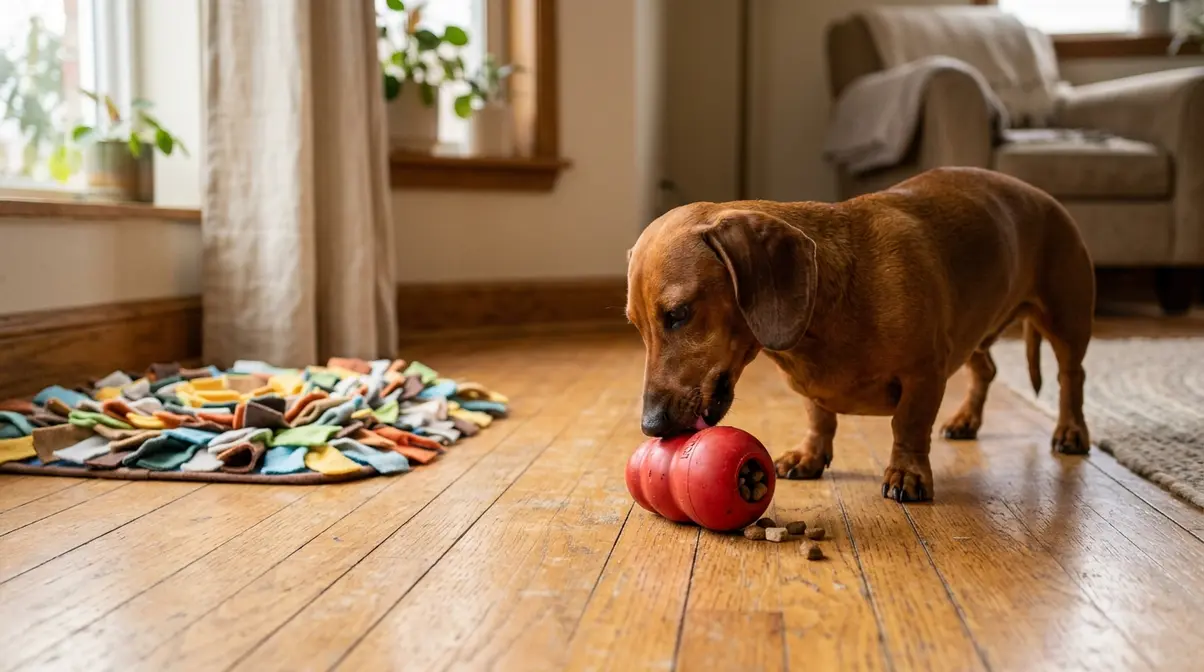
Most dachshunds struggle with 8 hours alone. They are pack-oriented dogs that form deep bonds with their owners, and prolonged isolation tends to manifest as barking, destructive chewing, or house-training regression. Four to six hours is more realistic for a well-prepared adult dachshund, eight hours is pushing it for most individuals, and it is genuinely too long for puppies and seniors.
According to The Dog’s Way, dachshunds’ deep owner attachment makes them particularly susceptible to separation anxiety, which requires proactive management rather than hoping the dog adjusts on its own.
Three management strategies that make a real difference:
- Puzzle toys and food-dispensing toys: A stuffed Kong or snuffle mat gives the dog a job to do and extends engagement well past the point where boredom sets in.
- Consistent departure routine: Dachshunds read context cues intensely. A predictable pre-departure routine (same sequence of actions before you leave) reduces the anxiety spike associated with unpredictability.
- Gradual alone-time training: Start with very short absences (5-10 minutes) and build up slowly. Dogs that have never practiced being alone often struggle more than those gradually conditioned to it.
For regular full work days, a dog walker or doggy daycare is the most honest solution. A second dachshund can reduce separation anxiety for some dogs, the two often bond closely and entertain each other, but it is not a guaranteed fix. It also doubles the cost, responsibility, and potential for behavioral issues. Proper training and enrichment are more reliable first steps before adding a second dog.
One question that often comes up alongside separation anxiety is whether the dog’s sex affects their temperament, and the honest answer is: a little.
Boy vs. Girl Dachshunds: Is There a Temperament Difference?
Owner community consensus suggests some general patterns: male dachshunds tend to be more openly affectionate, attention-seeking, and consistently eager to please. Female dachshunds tend toward greater independence and can be slightly more stubborn, some owners describe them as more selective about when they want affection.
These patterns are real but modest. Individual variation, shaped by genetics, early socialization, training quality, and environment, is a far stronger predictor of personality than sex. The best-behaved dachshund you’ll ever meet could be either male or female. Neutering and spaying can influence temperament, particularly around territorial marking and inter-dog aggression, so discuss timing and approach with your veterinarian. Dachshund owner communities consistently report that the quality of early socialization and training matters far more than sex when predicting how a dog will behave as an adult.
With temperament expectations set, let’s tackle the practical side of ownership, starting with the grooming routine that most short-haired dachshund owners find surprisingly manageable.
How Do You Groom a Short-Haired Dachshund, and Protect Their Back?
Short-haired dachshunds are genuinely low-maintenance groomers, a weekly brushing session handles most of what their smooth coat needs. The one caveat worth stating clearly: their back health requires far more active management than their coat does. This section covers both, because the spine care piece is the one most new owners underestimate.
The third item on the Honest Dachshund Checklist is the one most new owners underestimate: spine safety.
How Much Do Short-Haired Dachshunds Shed?
Short hair dachshund shedding is moderate, less than a Labrador Retriever or a double-coated breed like a Husky, but noticeably more than many owners expect given how short the coat is. Compared to a poodle, dachshunds shed considerably more. Shedding increases during spring and fall seasonal transitions, when loose hair volume picks up meaningfully.
One practical detail that competitors miss: the short, fine hairs embed in fabric rather than sitting on top of it. Upholstery, car seats, and fleece clothing trap dachshund hair in a way that vacuuming alone doesn’t fully address. A lint roller becomes a household staple. A weekly brushing session with a rubber curry brush significantly reduces the amount of hair that ends up around the home by capturing loose coat before it sheds naturally. Owner community reports consistently note that dark-colored clothing and light-colored upholstery show the fine hairs most visibly, and that a rubber brush used twice weekly during shedding season makes a noticeable difference.
Dachshunds are not hypoallergenic. If allergies are a concern in your household, consult an allergist before committing.
The good news is that managing the shedding is straightforward with the right tools.
Grooming Routine and Best Brush for a Short-Haired Dachshund
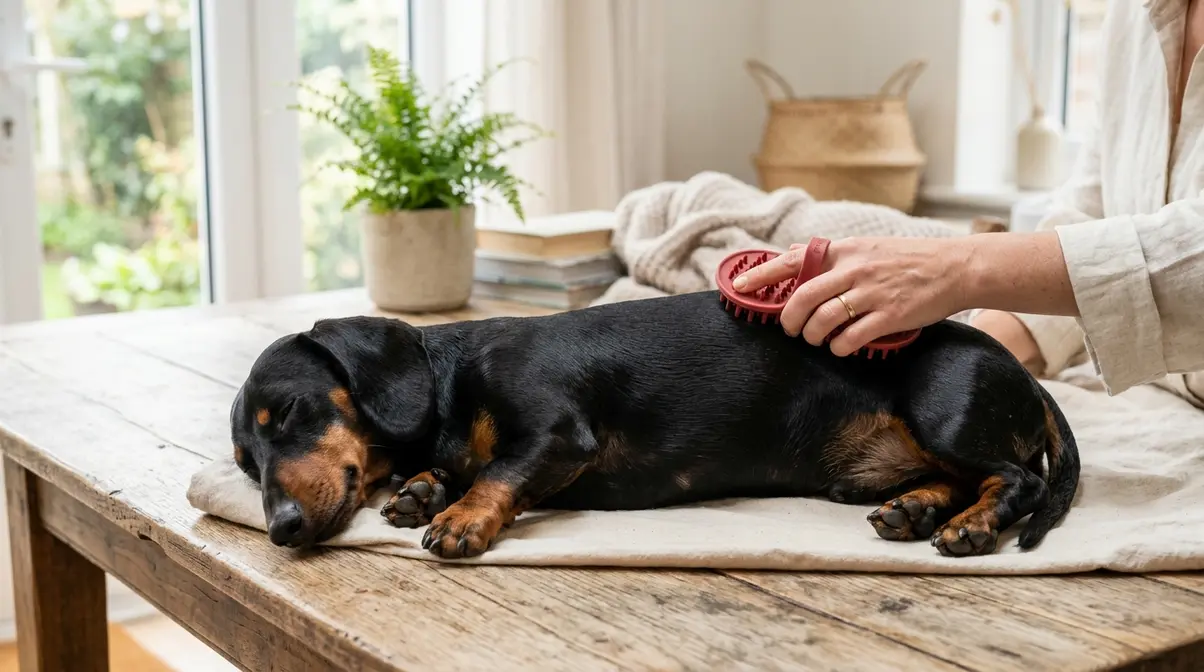
The best brush for a short hair dachshund is a rubber curry brush, sometimes called a hound glove, which removes loose hair efficiently while stimulating the skin and distributing natural oils. A soft-bristle brush works as a secondary option. Avoid metal slicker brushes: the wire bristles can scratch the thin skin over a smooth coat, causing irritation.
During seasonal shedding periods, a rubber grooming mitt used in firm circular motions captures the fine embedded hairs more effectively than bristle brushes. For dachshund grooming short hair, the complete weekly routine takes about five minutes:
- Run the rubber curry brush or hound glove over the entire coat in the direction of hair growth, then against it to lift loose hairs.
- Follow with a soft cloth wipe to remove any remaining dust or debris and add shine.
- Check the ears, floppy ears can trap moisture and debris. Wipe the inner ear gently with a vet-approved ear cleaner.
- Check nail length. Nails need trimming every 3-4 weeks; overgrown nails alter gait and can affect posture, which in turn stresses the spine.
Bathing every 4-6 weeks is sufficient unless the dog gets into something. Over-bathing strips the natural oils that keep the smooth coat healthy and shiny. Most experienced dachshund owners find this routine quick enough to complete during a quiet evening, and the consistency pays off in noticeably less loose hair around the home.
The grooming routine is simple. The spine care routine is not optional.
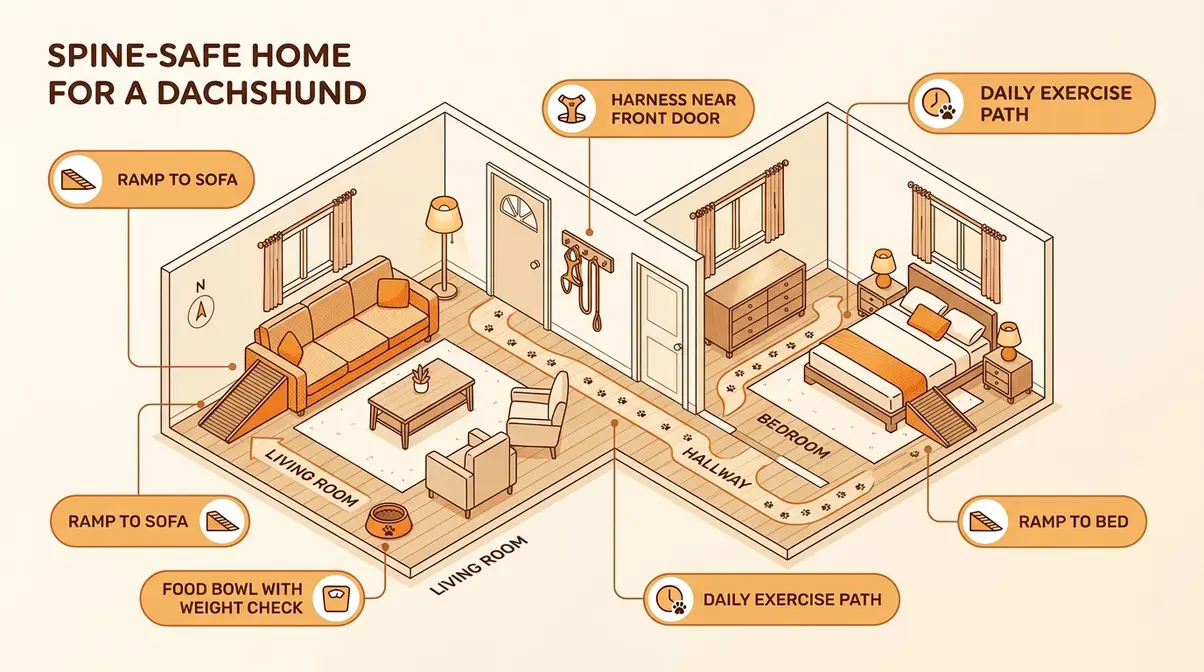
IVDD Prevention: 5 Spine-Safe Habits Every Dachshund Owner Needs
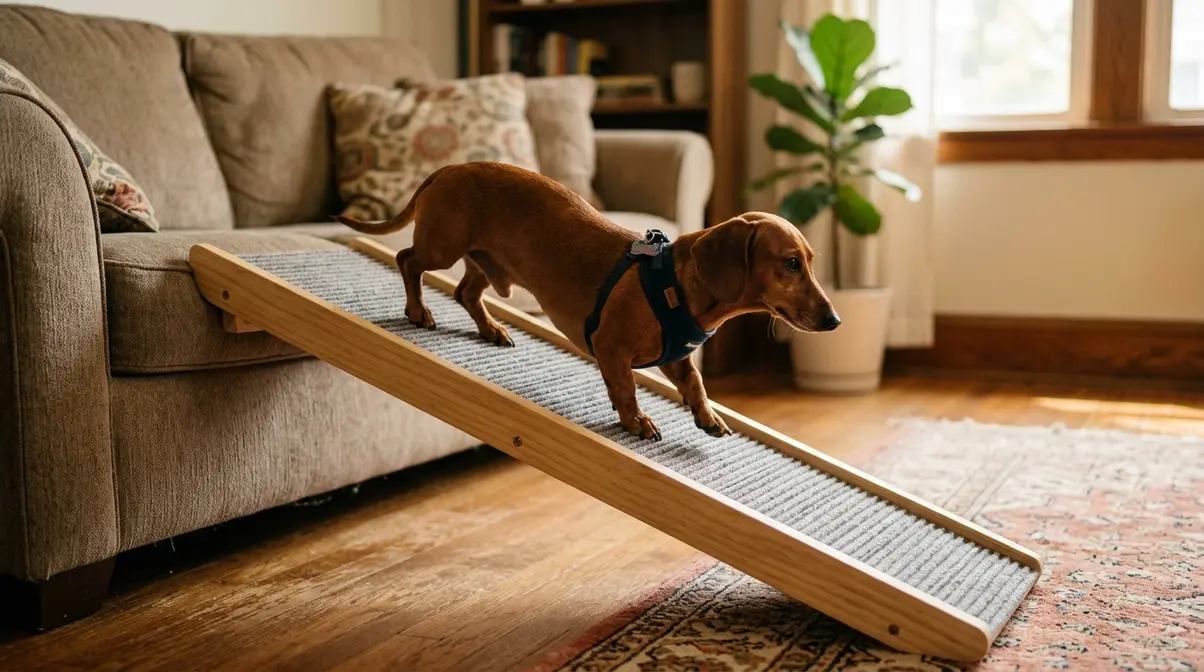
Intervertebral Disc Disease (IVDD) is a condition where the cushioning discs between the vertebrae degenerate or rupture, causing pain, nerve damage, or in severe cases, paralysis. It is not a rare complication for dachshunds, it is a defining health reality of the breed.
Dachshunds have chondrodystrophic genetics, meaning their cartilage develops differently from most breeds. This causes premature disc calcification, making the discs brittle and vulnerable to rupture from impacts that would be trivial in another breed. Researchers at UC Davis traced chondrodystrophy, defined by shortened long bones and premature degeneration and calcification of the discs, to an FGF4 retrogene on canine chromosome 12 (Brown et al., PNAS, 2017). According to Cornell University College of Veterinary Medicine, dachshunds account for 40-75% of all IVDD cases in dogs, citing American College of Veterinary Surgeons estimates. That figure is not a scare statistic, it is the reason every prevention tip below matters.
Key finding: Dachshunds account for 40-75% of all Intervertebral Disc Disease cases in dogs. The DachsLife 2015 survey of 2,031 Dachshunds, run by the Royal Veterinary College with the Dachshund Breed Council, found that dogs exercising more than one hour per day had lower odds of IVDD. Source: DachsLife 2015, Canine Genetics and Epidemiology, 2016.
Here are the five spine-safe habits that veterinary experts advise:
- Install ramps or steps to all furniture and beds. Disc degeneration is age-related and IVDD may or may not be linked to activity such as running or jumping, but limiting jumps is a simple precaution. According to the University of Illinois College of Veterinary Medicine, veterinary experts specifically advise discouraging at-risk pets from jumping on and off furniture. Ramps to every elevated surface your dog accesses are non-negotiable.
- Maintain a healthy weight. Excess body weight increases the mechanical load on the spine with every step, and overweight dogs had higher odds of IVDD in a 2025 study of 43,517 US dogs. Ask your veterinarian for a target weight range for your individual dog, even a few extra pounds on a dachshund’s elongated frame creates disproportionate spinal stress.
- Exercise daily for more than 60 minutes. This finding is particularly important for dachshund owners: the DachsLife 2015 survey found that dachshunds exercising more than one hour per day had reduced odds of IVDD, while those exercising less than 30 minutes per day had increased odds. A 2025 study of 43,517 US dogs also linked more daily active time to lower odds of IVDD (Journal of the American Veterinary Medical Association, 2025). Both are associations from owner surveys, not proof that exercise prevents IVDD. Regular, moderate exercise strengthens the supporting musculature around the spine.
- Use a harness, not a collar. Collar pulling during walks creates direct traction on the cervical spine. A well-fitted harness distributes force across the chest and shoulders instead, eliminating that repeated stress entirely.
- Support the full body when lifting. Place one hand under the chest and one under the hindquarters, keeping the spine horizontal. Never lift a dachshund by the front legs or allow the back end to sag, this creates the exact flexion and torsion that can trigger a disc event.
⚠️ Always consult your veterinarian before making changes to your dog’s care routine. If your dachshund shows signs of back pain, reluctance to move, crying when touched, dragging hind legs, or sudden weakness in the rear quarters, seek emergency veterinary care immediately. IVDD can progress rapidly.
With grooming and health management covered, let’s address one of the most common questions prospective owners ask: should you choose a short-haired or long-haired dachshund?
Short-Haired vs. Long-Haired Dachshund: What’s the Real Difference?
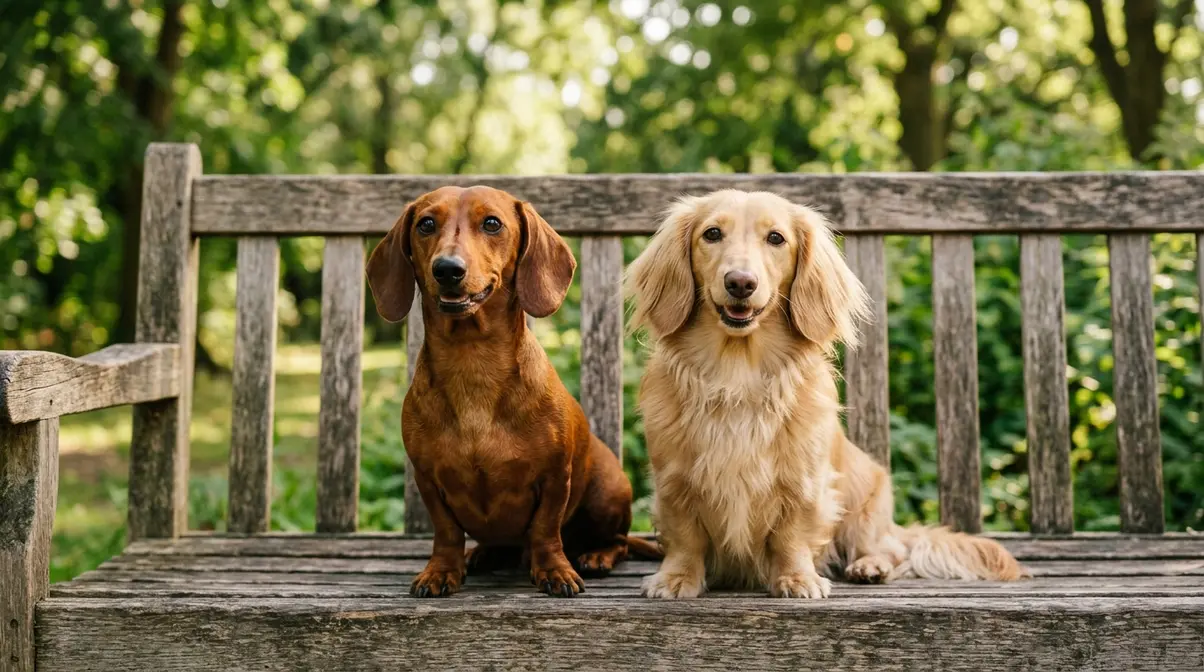
The coat type you choose affects two things meaningfully: your daily grooming commitment and your temperament expectations. Everything else, IVDD risk, exercise needs, lifespan, trainability, is essentially the same across coat types. The coat type doesn’t change the Honest Dachshund Checklist, but it does affect two items: temperament expectations and grooming commitment.
The smooth-coated dachshund is generally described by owners as more assertive and independent than the long-haired variety, which tends to be calmer and more affectionate, a difference often attributed to the spaniel genetics used in the long-haired variety’s development. This distinction is community consensus, not scientific fact, but it is consistent enough across owner experience to be genuinely useful when making a decision.
Temperament and Personality: Which Coat Type Is Calmer?
Among the three coat varieties, long-haired dachshunds are generally considered the calmest, the community consensus answer to “what is the calmest dachshund?” The long-haired vs. short-haired dachshund temperament difference is real but subtle, and it likely traces back to the spaniel crosses used to develop the long-haired variety. Spaniels are softer, more biddable dogs, and that influence appears to have carried through.
Short-haired (smooth) dachshunds tend to display the most pronounced version of the typical dachshund attitude: bold, assertive, and independent. Wire-haired dachshunds are typically described as the most playful and clown-like of the three, with a terrier-influenced energy that keeps owners entertained and occasionally exasperated.
Long-haired dachshunds are often described as gentler and more cuddly, more inclined to settle in your lap without needing to investigate every corner of the room first. For owners who want a dachshund but are concerned about the stubborn streak, the long-haired variety is worth considering.
Individual variation is significant across all three types. Socialization, training quality, and individual genetics matter more than coat type alone. The temperament patterns above are tendencies, not guarantees.
The temperament difference is real but subtle. The grooming difference is more concrete.
Grooming, Shedding, and Maintenance: A Practical Comparison
When comparing the long-haired dachshund vs. short-haired dachshund for grooming practicality, the smooth coat wins decisively on maintenance ease:
| Coat Type | Brushing Frequency | Shedding Level | Professional Grooming |
|---|---|---|---|
| Short-haired (smooth) | Weekly | Moderate | Rarely needed |
| Long-haired | Daily | Moderate-Heavy | Occasional trim |
| Wire-haired | Weekly + hand-strip | Low-Moderate | 1-2x/year |
The long-haired coat requires daily brushing to prevent tangles, particularly behind the ears and on the chest feathering, areas where mats develop quickly if neglected. Seasonal shedding is heavier than the smooth coat, and most long-haired dachshund owners schedule occasional professional grooming to manage the coat length. Wire-haired dachshunds require hand-stripping one to two times per year to maintain proper coat texture, a specialized technique that most groomers charge a premium for.
The smooth coat’s low maintenance is a genuine practical advantage, particularly for owners who want a beautiful, healthy coat without a significant daily time investment.
If you’ve decided the short-haired variety is right for you, the next question is often about size, and whether a miniature or standard dachshund better fits your lifestyle.
Miniature vs. Standard Short-Haired Dachshund: Which Size Is Right for You?
The miniature dachshund short hair and the standard short-haired dachshund are the same breed in different sizes, but the practical differences between them are more meaningful than most guides acknowledge. Miniatures are not simply smaller standards. They can have slightly different energy profiles, their smaller bones require extra care during handling, and they are subject to some additional health considerations worth understanding before you choose.
The short hair mini dachshund is particularly popular for urban and apartment living, and for good reason.
Size and Weight: Mini vs. Standard Dachshund
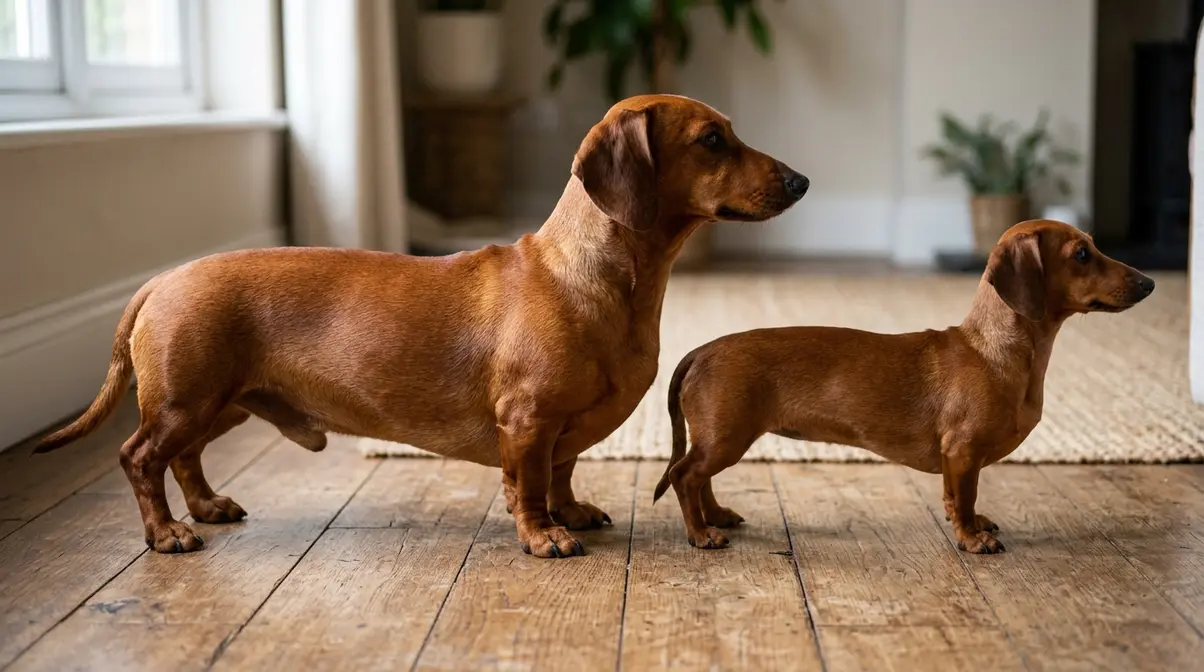
According to the American Kennel Club, the two official size classifications are clear: standard dachshunds weigh 16-32 lbs and stand approximately 8-9 inches at the shoulder; miniature dachshunds weigh under 11 lbs and stand 5-6 inches tall.
| Size | Weight | Height | Best For |
|---|---|---|---|
| Standard | 16-32 lbs | 8-9 inches | Active owners, homes with space |
| Miniature | Under 11 lbs | 5-6 inches | Apartments, smaller living spaces |
| Rabbit (note) | Under 8 lbs | Varies | Recognized in some European countries; NOT AKC-recognized |
The mini dachshund short hair is easier to carry, eats less, and fits more comfortably in smaller living spaces. Their smaller bones can be more fragile, however, drops or rough handling carry more risk than with a standard-sized dog.
“Toy” and “teacup” dachshunds are not AKC-recognized size classifications. These are marketing terms, not breed designations, and they are frequently associated with irresponsible breeding practices that prioritize extreme small size over health. Be cautious of any breeder using these terms. Short hair miniature dachshund puppies from reputable breeders will be sold as miniatures, full stop.
Size affects more than just how much food you buy, it also shapes how well a dachshund fits your living situation.
Are Miniature Dachshunds Good for Apartments?
Mini dachshund short hair dogs can thrive in apartments, both sizes adapt well to smaller living spaces, provided their exercise needs are met consistently. The key requirement is daily activity, at least 60 minutes and ideally more (see the IVDD prevention section for the research behind this recommendation), not square footage. A miniature dachshund in a small apartment with a committed owner will be healthier and happier than a standard dachshund in a large house that rarely goes outside.
The honest caveat for apartment dwellers: dachshunds bark. Both sizes are vocal, and the miniature’s size does not reduce the volume or frequency. Thin walls and close neighbors can create real friction, particularly if separation anxiety leads to extended barking during the owner’s absence. This connects directly to the separation anxiety strategies covered earlier, apartment dachshunds that are left alone without adequate preparation are the ones most likely to become a noise complaint.
Ramps are just as important in an apartment as in a house. If your dachshund is allowed on furniture, and most are, because they insist on it, ramps to the sofa and bed are essential spine protection regardless of your living space. Dachshund owner communities consistently note that apartment living works well for the breed when two conditions are met: a reliable daily exercise routine and a proactive plan for managing alone time.
Whether you choose a mini or standard, one of the most enjoyable parts of owning a short-haired dachshund is the incredible variety of colors and patterns available.
Short-Haired Dachshund Colors and Patterns: A Quick Guide
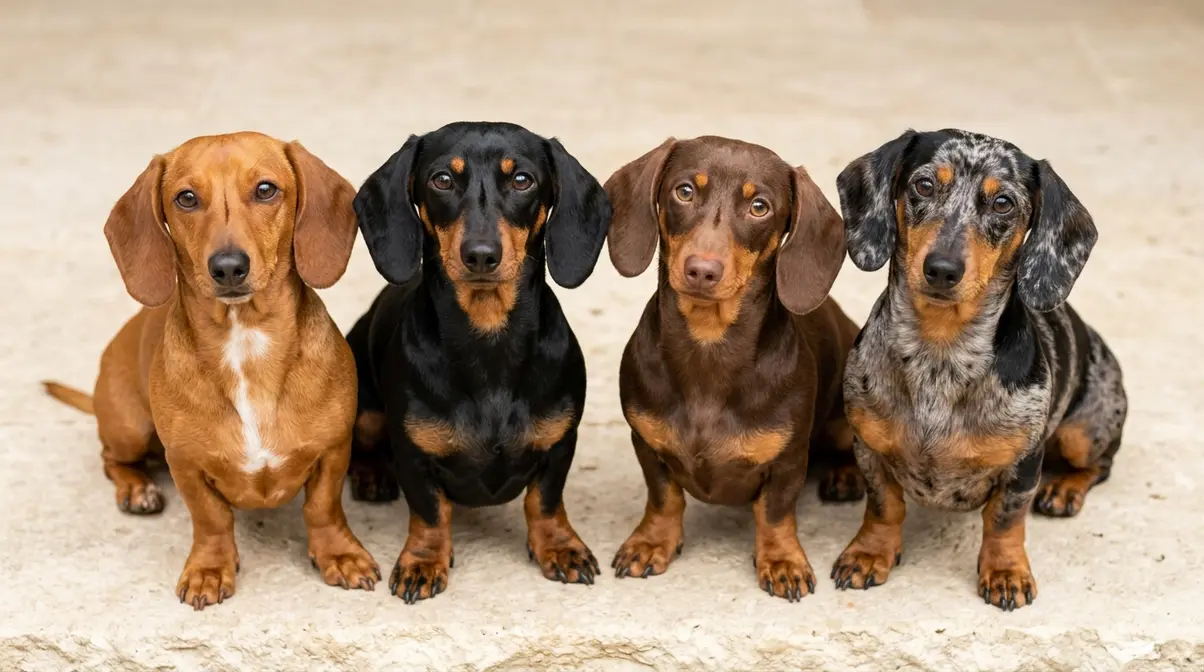
The dachshund short hair colors available are remarkable, arguably one of the widest color and pattern varieties of any recognized breed. The short-haired coat actually showcases these colors particularly well, since nothing obscures the base coat the way long feathering can.
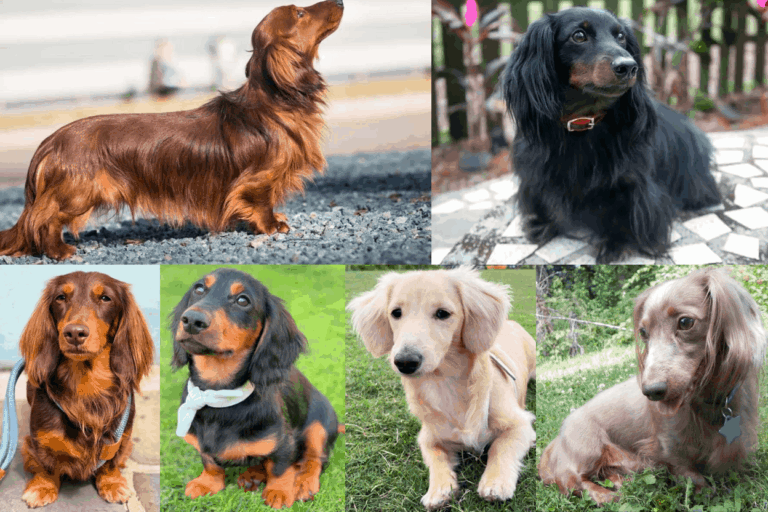
The AKC recognizes several base colors for dachshunds: red (the most common), black and tan, chocolate and tan, cream, blue and tan, and Isabella (fawn) and tan. Beyond base colors, the breed carries distinct coat patterns including dapple, piebald, sable, and brindle, each creating a visually distinct appearance.
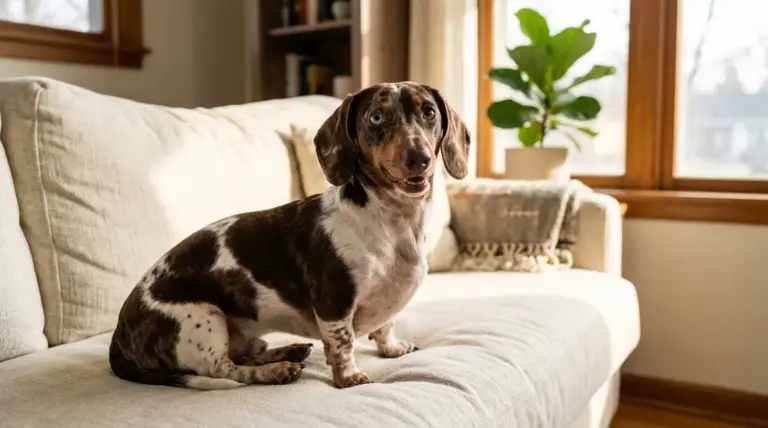
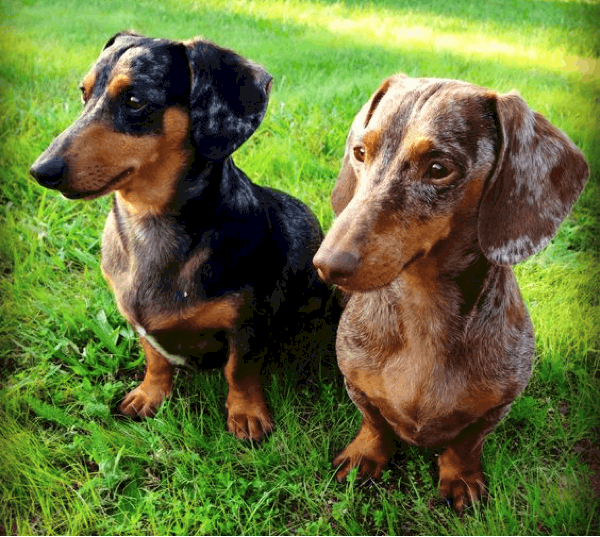
A few highlights worth noting: red dachshunds are the most commonly seen, and many people picture a red smooth dachshund when they think of the breed. Black and tan is the other classic combination. The dapple pattern, a mottled, merle-like effect, is one of the most visually striking options, but it comes with an important health consideration. Double dapple dachshunds (bred from two dapple parents) carry a significantly elevated risk of hearing loss and vision problems, including missing or reduced eyes; the Dachshund Club of America lists deafness, reduced eye size and missing eyes as health issues double dapples are more likely to carry. Responsible breeders never intentionally produce double dapples.
For the complete breakdown of every recognized color and pattern, including genetics and what to look for in a puppy, visit a complete guide to dachshund colors and patterns. If the dapple pattern specifically interests you, learn more about the dapple dachshund pattern, including the double dapple health warning in detail. And for one of the rarer and more visually unusual color variations, see our guide to understanding the rare blue dachshund coat.
Once you’ve fallen for a color, the next question is usually the practical one: how much does a short-haired dachshund actually cost?
How Much Does a Short-Haired Dachshund Cost?
Cost is the first item on the Honest Dachshund Checklist, and the one most people underestimate. The puppy price gets the attention, but the first year of ownership is where the real financial commitment becomes clear. A short-haired dachshund price from a reputable breeder is just the beginning of a 12-16 year financial relationship.
Puppy Price: Breeder vs. Rescue
A short hair dachshund for sale from a reputable breeder typically costs $500-$2,000+, depending on lineage, geographic location, and coat color. Rare and popular colors command premium prices, dapple dachshunds and English cream dachshunds frequently sit at the higher end of the range or above it. For context on what affects dapple pricing specifically, see our guide on how much dapple dachshunds typically cost.
Miniature dachshund short hair for sale through rescues and shelters typically costs $50-$500 in adoption fees. Organizations like Dachshund Rescue of North America (DRNA) regularly have dogs of all ages available for adoption, including young adults. Rescue is worth serious consideration, many dachshunds end up in rescue precisely because their previous owners underestimated the breed’s needs.
Red flags for scams when searching for dachshund short hair for sale: prices that seem significantly below market rate, sellers who refuse in-person visits or video calls showing the puppy with its mother, payment required via wire transfer or gift cards only, and no health guarantees or vaccination records. Reputable breeders will welcome your questions and encourage you to visit.
The puppy price is just the beginning, the first year is where the real costs accumulate.
First-Year Costs: What to Budget
The ASPCA cost estimates put total first-year ownership costs for a small dog at approximately $3,221 (verify the current publication year on the ASPCA site, as this figure may be updated). That figure is a useful anchor, but the actual range for a dachshund can vary significantly based on your location and the specific choices you make.
| Item | Estimated First-Year Cost |
|---|---|
| Puppy price (reputable breeder) | $500-$2,000+ |
| Initial supplies (crate, ramps, harness, food bowls, toys) | $200-$400 |
| First vet visit + vaccinations | $200-$400 |
| Spay/neuter | $200-$500 |
| Food (quality small-breed formula) | $300-$600 |
| Training classes | $100-$300 |
| Total (estimated) | $1,500-$4,200+ |
One line item most cost guides skip: ramps and steps. Budget $50-$200 for quality ramps to furniture and beds. This is not optional equipment, it is spine insurance, directly connected to the IVDD prevention section above. Skipping it to save money now could cost thousands in veterinary care later.
The first year is the most expensive, but the lifetime cost is what prospective owners rarely calculate.
Lifetime Cost: The Number Most Breed Guides Skip
The American Kennel Club gives a life expectancy of 12-16 years for the breed, which is genuinely good news. It also means a significant long-term financial commitment. The ASPCA annual cost data estimates annual ongoing costs for a small dog at approximately $1,391 after the first year (verify the current publication year on the ASPCA site).
Working through the numbers: a puppy from a breeder plus first-year costs plus 14 additional years of annual expenses totals approximately $22,000-$25,000+ for a healthy dog over its lifetime. That is a meaningful financial commitment that deserves honest planning.
The wildcard is IVDD. Spinal surgery for a dachshund is estimated to cost $3,000-$8,000+ per episode, depending on severity and geographic location; verify current figures with your veterinarian or pet insurance provider, as costs vary significantly by region. This is not a scenario you plan to need, it is a scenario you plan for, because the breed’s IVDD rate makes it a genuine possibility. Pet insurance is strongly recommended, ideally purchased before any signs of back problems appear (pre-existing conditions are typically excluded). An emergency veterinary fund of $2,000-$5,000 provides additional protection if insurance coverage has gaps.
| Cost Category | Estimated Amount |
|---|---|
| Puppy + first year | $2,000-$6,200+ |
| Annual ongoing (years 2-15, × 14 years) | ~$19,474 |
| IVDD surgery reserve (recommended) | $3,000-$8,000+ |
| Estimated lifetime total | $24,000-$33,000+ |
Before we get to the FAQ, there’s one more question that comes up frequently among dachshund enthusiasts: what happens when you breed a short-haired and long-haired dachshund together?
Breeding Short-Haired and Long-Haired Dachshunds: What You Need to Know
When breeding long hair and short hair dachshunds, the outcome depends on which genes each parent carries. The short answer: you can do it, the puppies will likely look smooth-coated, but the genetics are more interesting than they first appear. The key insight that most guides miss is the hidden gene concept, a smooth dachshund can carry the long-hair gene without expressing it.
What Coat Does a Puppy Inherit From Short-Haired Parents?
Coat inheritance in dachshunds follows basic dominant/recessive genetics. The smooth (short) coat gene is dominant, meaning it is expressed whenever it is present. The long coat gene is recessive, meaning it is only expressed when a dog inherits two copies of it, one from each parent.
A smooth dachshund can carry one of two genetic profiles: “smooth/smooth” (two dominant smooth genes, no hidden long-hair gene) or “smooth/long” (one smooth gene, one hidden long-hair gene). The dog looks smooth either way, but the second type can pass the long-hair gene to its offspring.
When two smooth dachshunds that both carry the hidden long-hair gene are bred together, basic Mendelian genetics suggests approximately 25% of the puppies may be long-haired, even though both parents appear smooth-coated, though actual outcomes vary. This is a theoretical probability based on standard inheritance ratios; consult a canine genetics resource or your veterinarian for breed-specific confirmation. This is why long-haired puppies can appear in litters where both parents are smooth, it is not a breeding error, it is genetics working as expected.
Wire-haired coat is controlled by a separate dominant gene and behaves differently from the smooth/long relationship.
So yes, you can breed a short-haired and long-haired dachshund together, here’s what to expect.
Can You Breed a Short-Haired and Long-Haired Dachshund?
Yes, a smooth and long-haired dachshund can absolutely be bred together. They are the same breed, simply different coat varieties. The resulting puppies will most likely be smooth-coated, since the smooth gene is dominant, but they will carry the long-hair gene and can pass it on to future generations.
Responsible breeding involves much more than coat type decisions, however. Regardless of coat combination, health testing is essential: IVDD screening, eye examinations for dapple crosses, and genetic testing where available. The dachshund community has made meaningful progress on IVDD screening protocols in recent years, and reputable breeders prioritize health clearances. Choose breeders who test their breeding dogs and can provide documentation, this is the single most important step in finding a puppy with the best possible health foundation.
With all the key topics covered, let’s address the most common questions prospective short-haired dachshund owners ask.
Frequently Asked Questions About Short-Haired Dachshunds
Are short-haired Dachshunds good dogs?
Short-haired dachshunds are excellent dogs for the right owner. They are loyal, affectionate, intelligent, and form deep bonds with their families. They make alert watchdogs and adapt well to apartments and houses alike. However, their independent hunting instincts mean they require patient, consistent training and early socialization. They are best suited to owners who can commit to their exercise, training, and spine-care needs from day one.
What is the downside of Dachshunds?
The biggest downside of dachshunds is their high IVDD risk, they account for 40-75% of all Intervertebral Disc Disease cases in dogs, according to Cornell University College of Veterinary Medicine. Beyond spine health, they can be stubborn and challenging to train, prone to excessive barking, and susceptible to separation anxiety. Managing these traits requires home modifications, consistent training from puppyhood, and a realistic plan for alone time.
How much is a short-haired dachshund?
A short-haired dachshund from a reputable breeder typically costs $500-$2,000+, depending on lineage, location, and coat color. Rare colors like dapple or English cream command higher prices. Adoption through a rescue organization costs $50-$500. First-year ownership runs approximately $1,500-$4,200+ when you factor in supplies, veterinary care, food, and training. Always research breeders carefully and treat suspiciously low prices as a red flag.
What to avoid with Dachshunds?
To protect a dachshund’s spine, avoid letting them jump on or off furniture, run up steep stairs without support, or carry excess weight. Install ramps to all elevated surfaces they access. Never lift a dachshund by their front legs, always support the full body horizontally. Avoid harsh training methods; dachshunds respond poorly to punishment and can become defensively reactive. Overfeeding is a serious risk: in a 2025 study of 43,517 US dogs, overweight dogs had higher odds of IVDD.
Can a Dachshund be left alone for 8 hours?
Most dachshunds struggle with 8 hours alone. They bond deeply with their owners and are prone to separation anxiety, which can show up as barking, destructive chewing, or house-training regression. Four to six hours is more manageable for a well-prepared adult. For regular long absences, a dog walker or doggy daycare is the most practical solution, puzzle toys and a consistent departure routine help but rarely solve the problem entirely on their own.
Do Dachshunds need a second dog?
Dachshunds don’t strictly need a second dog, but many owners find that a companion reduces separation anxiety and provides mental stimulation during alone time. Two dachshunds often bond closely and entertain each other effectively. However, a second dog doubles the cost, responsibility, and potential for behavioral complications. It is not a guaranteed fix for separation anxiety, proper training and enrichment are more reliable first steps before adding another dog to the household.
What is the calmest dachshund?
Among the three coat varieties, long-haired dachshunds are generally considered the calmest and most gentle, a trait attributed to the spaniel genetics used in their development. Wire-haired dachshunds tend to be the most energetic and playful. Short-haired (smooth) dachshunds typically display the most pronounced “typical dachshund attitude”, bold, assertive, and independent. Individual temperament varies significantly regardless of coat type, so early socialization matters more than coat selection alone.
Are girl or boy Dachshunds nicer?
Both male and female dachshunds make wonderful companions, and individual personality matters far more than sex. Male dachshunds are often described as more openly affectionate and attention-seeking, while females tend to be more independent and can be slightly more stubborn. Neutering and spaying can influence temperament. The best predictor of a well-adjusted dachshund is early socialization and consistent, positive training, not sex.
What to Do Before You Bring Home a Short-Haired Dachshund
For prospective owners, the short hair dachshund delivers loyalty, personality, and a genuinely entertaining companion in a compact, long-lived package. Dachshunds account for 40-75% of all IVDD cases in dogs, according to Cornell University College of Veterinary Medicine, a statistic that makes proactive spine care non-negotiable from the day your dog arrives. The best preparation combines a spine-safe home setup, realistic temperament expectations, and honest cost planning before the puppy comes home.
The Honest Dachshund Checklist covers all four pillars: costs (first-year budget, lifetime estimate, IVDD surgery reserve), spine safety (ramps, harness, weight management, daily exercise), temperament realities (stubbornness, separation anxiety, the vocal nature), and training commitment (short sessions, high-value rewards, patience over punishment). You came here wanting the honest picture, and you now have it across all four dimensions.
Start with the spine-safe home setup before your puppy arrives: install ramps to furniture and beds, identify a veterinarian experienced with dachshunds, and set a realistic first-year budget that includes the emergency reserve. Then explore our complete dachshund breed guide for everything else you need to prepare, because the more informed you are walking in, the better the experience is for both you and your dachie.
Sources
- Cornell University College of Veterinary Medicine, Riney Canine Health Center, “Intervertebral disc disease”. www.vet.cornell.edu
- Packer RMA, Seath IJ, O’Neill DG, De Decker S, Volk HA. “DachsLife 2015: an investigation of lifestyle associations with the risk of intervertebral disc disease in Dachshunds.” Canine Genetics and Epidemiology, 2016. pmc.ncbi.nlm.nih.gov
- Wee C, Nin DZ. “Demographic and lifestyle characteristics impact lifetime prevalence of owner-reported intervertebral disc disease: 43,517 companion dogs in the United States.” Journal of the American Veterinary Medical Association, 2025. avmajournals.avma.org
- University of Illinois College of Veterinary Medicine, “Intervertebral Disc Disease in Dogs”. vetmed.illinois.edu
- Brown EA et al. “FGF4 retrogene on CFA12 is responsible for chondrodystrophy and intervertebral disc disease in dogs.” Proceedings of the National Academy of Sciences, 2017. pubmed.ncbi.nlm.nih.gov
- American Kennel Club, Dachshund breed profile (life expectancy, height and weight). www.akc.org
- Dachshund Club of America, “Dachshund Colors & Patterns” (2020). www.dachshundclubofamerica.org