
Dachshund lifespan is about average for a smaller dog breed (PetMD, 2026). That is an average, though, and an average is not a promise for your dog. If you lie awake over back problems, a few extra pounds or a dog who seems to be slowing down, that worry is fair, and it is also something you can act on.
This guide explains where the typical lifespan figure comes from and why some sources quote a slightly different range. It looks at how size, coat and mix fit in, what the research says about back disease, and how to tell normal aging from signs worth a vet call. It closes with daily care steps that matter and a short plan for this week.
Nothing here promises a particular number of years. You will find honest gaps too: where no source settles a question, the guide says so instead of guessing.
- The typical Dachshund lifespan is about average for a smaller dog breed, and an average cannot predict one dog (PetMD, 2026).
- Back disease is a major known risk: Dachshunds are at a 10-12 times higher risk of IVDD than other breeds, and an estimated 19-24 % of Dachshunds show signs of IVDD during their lifetime (Canine Genetics and Epidemiology (PubMed Central), 2016).
- Weight, stairs and regular vet visits are the levers you control, though none guarantees extra years.
- Sudden changes in movement, behavior or weight deserve a vet check, not a wait-and-see approach.
Disclaimer: This article is for informational purposes only and does not constitute veterinary advice. If you have concerns about a dog’s health or genetics, consult a licensed veterinarian.
Table of Contents
- Key Concepts & Terminology
- How Long Do Dachshunds Live on Average?
- Does Size, Coat or Mix Change How Long a Dachshund Lives?
- Which Health Problems Can Shorten a Dachshund’s Life?
- When Is a Dachshund Senior, and What Are the Signs of Aging?
- How Can You Help Your Dachshund Live Longer?
- What Is the Oldest Recorded Dachshund?
- When an Average Lifespan Doesn’t Apply to Your Dachshund
- Next Steps
- FAQ
Key Concepts & Terminology
These terms come up throughout the guide, and sources often use them loosely. Here they are in plain owner language.
- Lifespan is how long a dog lives. For Dachshunds, the typical lifespan is about average for a smaller dog breed, and it describes a spread of outcomes, not a promise (PetMD, 2026).
- Life expectancy is the average number of years a group of dogs lives. It describes a population. It says nothing certain about your dog.
- Average is the middle of the figures a source has gathered. Two sources can both be honest and still give slightly different averages.
- Standard, miniature and toy are size varieties. Miniatures are the smaller dogs, and many owners also ask about the long-haired coat, which is a coat type, not a size.
- IVDD (intervertebral disc disease) is a back condition where the cushioning discs between spine bones bulge or burst and press on the spinal cord.
- Senior is the stage when a dog starts showing age-related changes. No source in this research gives a firm starting age, so the guide avoids one.
- Longevity means living a long life, usually used when talking about what supports it.
If you have seen “life expectancy” and “lifespan” used as if they were the same thing, you are not wrong to be confused. Treat both as group descriptions and your own dog as the individual case.
How Long Do Dachshunds Live on Average?
The typical Dachshund lifespan is about average for a smaller dog breed (PetMD, 2026). That is the direct answer, and it is also the average lifespan most owners will meet in search results. It is not a forecast for one dog.
If your dog died near the top of the typical range, that is not outside it. What mattered most is hard to pin to a single cause. Care, body weight, genetics and health history all play a part, and none of the sources in this research ranks them against each other.

A range this wide reflects real differences between dogs. One Dachshund may stay lean, avoid back trouble and reach the upper end. Another may face a health problem early. The number describes the group, and your dog’s own story is shaped by daily choices and some luck.
Sources also disagree a little on the exact range, which the next subsections explain. For size, coat and mix detail, see the section after this one. For the back, see the health section.
The Typical Range and What It Means
The typical Dachshund lifespan is 12 to 16 years, about average for a smaller dog breed (PetMD, 2026). In practice, that means a dog reaching 12 is within the expected range, and a dog reaching 15 or 16 is at the longer end of it.
Where does your dog fall? If your Dachshund is 10 and healthy, you are not behind schedule. If your dog is 16, you have shared a long stretch of years by any reading of the range. Either way, the range is a guide to what is common, and no dog is obliged to match it.
Why Sources Quote Different Ranges
Sources do not agree on one range. One pet site reports that the American Kennel Club gives Dachshunds an expected lifespan of 12 to 15 years (PawOrigins®). Other sites say Dachshunds live 12 to 16 years on average, including VitaDog for standard Dachshunds and PetLab Co (VitaDog) (PetLab Co).
So you will see “12 to 15” on some pages and “12 to 16” on others. The research behind this guide does not resolve the gap, and this guide does not pick a winner. The difference is one year at the top end, and several things could explain a gap like that, such as different data sets or rounding, but no source here says which applies.
For you, the practical reading is simple. Expect most healthy Dachshunds to land between about 12 and 15 or 16 years, and treat the edges as soft. Do not worry that a dog at 15 has “fallen short” of a 16 year page.
An Average Is Not a Promise for One Dog
An average describes groups, not individuals. One Quora answerer made this point bluntly, saying average lifespan is not very useful for a single dog because outcomes depend on luck, general care and genetics (source).
That is a reader’s opinion, not a study, but it matches how averages work. If you worry your dog will miss the average, remember that the average already includes dogs that lived shorter and longer lives. Good care shifts the odds in your favor. It cannot rule out bad luck, and it is honest to say so.
Male vs Female Lifespan
Lifespan differences between male and female Dachshunds are hard to pin down, and there is no sourced figure to give here. Any claim about one sex living longer than the other should be treated with caution.
If you are choosing between a male and a female puppy, sex is a weak reason to expect more or fewer years. Individual health, weight, back care and the breeder’s health history are likely to matter more in general terms. Ask your vet and the breeder about the parents’ health instead of leaning on the puppy’s sex.
Does Size, Coat or Mix Change How Long a Dachshund Lives?
Sourced ranges look similar across Dachshund types, though the research has gaps. Standard Dachshunds are reported at 12 to 16 years, and no source here gives a different figure for miniatures or coats (VitaDog).
The table sets out what sources say and where nothing was found.
| Type | Sourced range | Source | Note |
|---|---|---|---|
| Standard | 12 to 16 years (VitaDog) (PetMD, 2026) | VitaDog | Also the typical Dachshund range |
| Miniature | More than 12 years (PawOrigins®) | Royal Kennel Club, as reported by PawOrigins | No upper figure found |
| Long-haired | Not found | None | Coat type; no separate range sourced |
| Mix (Dorkie, Dachshund-Yorkshire) | Within 12 to 16 and 11 to 15 years (PetMD, 2025) | PetMD | Uses each parent breed’s range |

A Miniature Dachshund, a smaller variety of the breed, is described by the Royal Kennel Club as living more than 12 years (PawOrigins®). That is a floor, not a ceiling, so it neither confirms nor contradicts the wider 12 to 16 year range. If you own a mini long haired dachshund, the typical range is a reasonable starting point, with the caveat that no source here gives a coat-specific number.
Long-haired, wire-haired and dapple coats are about looks and grooming, and no figure was found tying coat or color to years. Dapple and other color patterns can come with their own health questions, which are covered elsewhere. If you want detail, see this dapple dachshund lifespan and health issues page, this blue dachshund life expectancy and health page, or this one on short-haired dachshund care and temperament.
Mixes are the hardest to predict. PetMD says Doxies and Yorkies have average lifespans of 12 to 16 and 11 to 15 years, and expects a Dorkie to fall within that spread (PetMD, 2025). That is an estimate built from parent breeds, not a measured result for Dorkies. For a mix, the sensible reading is “somewhere in the parents’ ranges,” then adjust for the dog in front of you.
Which Health Problems Can Shorten a Dachshund’s Life?
Dachshunds are at a 10 to 12 times higher risk of IVDD than other breeds (Canine Genetics and Epidemiology (PubMed Central), 2016). That is the main known health risk for the back. It is a risk, not a verdict, and many Dachshunds never develop serious disc disease.
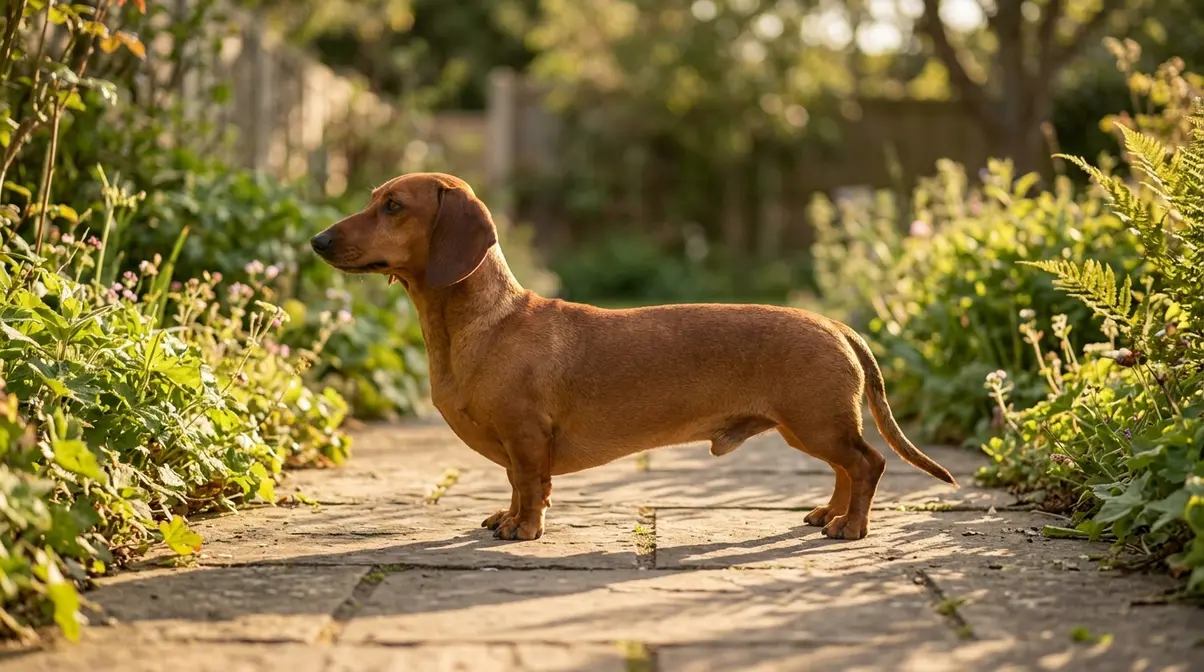
If your dog has no back issues yet, you are in the best position to act. Protecting the spine early is easier than managing a crisis later. Other conditions can affect Dachshunds too, such as dental and weight-related problems, but this research gives no figures for them, so they are only a general mention here.
Are miniatures healthier? No source in this research answers that, so treat any claim that they are “hardier” with caution. Size varieties share the same long-backed build, and the safest assumption is that back care matters for all of them.
Three questions are worth answering from here. First, what IVDD is and how common it is. Second, what daily habits reduce strain. Third, which signs mean a vet call. The subsections below take each in turn. For a broader look at warning signs and prevention, the IVDD warning signs and prevention guide goes further than this article does.
IVDD and How It Affects Lifespan
IVDD is a disease where the soft discs cushioning your Dachshund’s spine bulge or rupture and press on nerves. Research in Canine Genetics and Epidemiology reports that Dachshunds are at a 10 to 12 times higher risk of IVDD than other breeds, and an estimated 19 to 24% show signs during their lifetime (Canine Genetics and Epidemiology (PubMed Central), 2016).
If you are reading the term for the first time, the key point is that this is common enough to take seriously and uncommon enough that most dogs are not doomed by it. Those figures describe the breed, not your dog. Only a vet can say whether a particular dog has it.
Lowering Strain on a Fragile Back
Practitioners offer a short set of habits for easing pressure on the spine. These are views, not guarantees.
- Limit jumping and stairs. Dachshund Station says the back is extremely fragile, so dogs should not jump on and off furniture or climb stairs.
- Use ramps by favorite furniture. Dachshund Station suggests ramps beside the couch, chair and bed to help avoid injury.
- Keep up vet checkups. The same channel recommends regular visits.
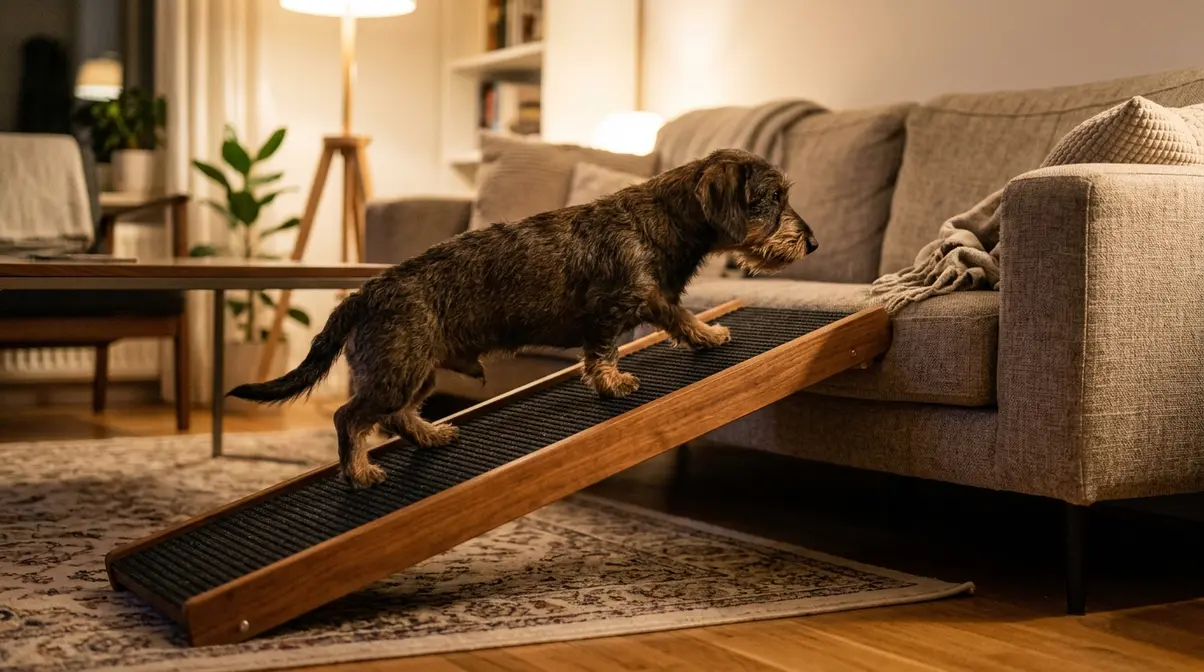
Other conditions exist, so these tips do not guarantee an outcome. One YouTube commenter said their Dachshund reached 16 after owners followed the diet, weight and stair advice, and still died of a kidney issue, which they described as a natural death (source). That is one reader’s account, and it shows why following every tip can still leave you worried. Doing the sensible things is worth it. Doing them does not buy certainty.
No source here says whether miniatures need fewer precautions, so the safest approach is to apply these steps to every size.
When to See a Vet About Back Pain or Slowing Down
Call your vet when something changes suddenly, and do not wait to see if it passes. These are signs worth a call:
- A sudden change in weight, behavior or appearance. Dachshund Station advises a vet visit as soon as possible for these.
- Reluctance to jump or climb a step your dog used to manage easily.
- Slowing down that is abrupt instead of gradual.
- Any pain, weakness or trouble moving. Animal Platoon notes that IVDD can lead to back problems or paralysis if not managed carefully.
Picture a dog that suddenly refuses the stairs it climbed all last week. That is not a “wait and see” moment. A call to the vet is the right move, and if you see weakness or paralysis, seek care right away.
When Is a Dachshund Senior, and What Are the Signs of Aging?
One owner on Reddit noticed that after a big day of chasing the kids around the yard, their 9-year-old girl was slow the next day and mostly slept (source). That is a common picture, and it is often ordinary aging, though a vet should check anything sudden.
No source in this research gives a firm senior age, so none is stated here. Likewise, no sourced conversion turns a Dachshund’s years into human years. If you are wondering about a 10 year old dachshund in human years or an 11 year old, the honest answer is that there is no reliable figure in this research, and a vet can give a better sense for your dog.
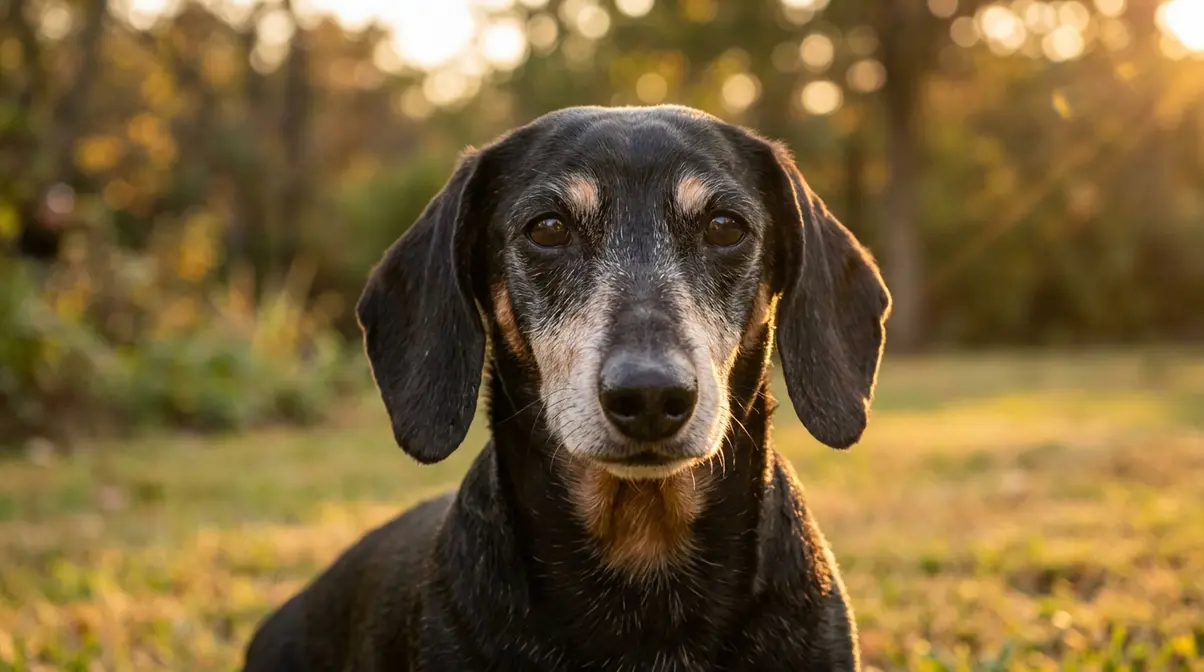
Use this checklist to sort what is typically normal from what needs a call.
- Often normal aging:
- Sleeping more than before
- Needing a day to recover after a big play session
- A greying muzzle
- Slower, steadier walks that change gradually
- Worth a vet visit:
- A sudden drop in energy, appetite or weight
- Reluctance to jump, climb or use stairs that appears quickly
- Yelping, shaking or a hunched posture
- Changes in toilet habits or behavior that come on fast
The dividing line is speed and direction. Gradual change over months is usually aging. A sharp change over days is a reason to book a visit. When in doubt, call.
How Can You Help Your Dachshund Live Longer?
Weight, food, teeth, stairs and vet visits are the practical levers, and none comes with a guarantee. These steps are drawn from practitioner and reader views, so treat them as sensible habits, not medical instructions.
- Keep weight lean. Dachshund Station says to maintain a healthy weight from puppyhood through senior age, using quality dog food and never sharing table scraps. A lean dog puts less load on a long back.
- Feed a balanced diet. Creature Corner suggests a balanced diet of quality ingredients, and tells owners to ask their veterinarian which diet is best. This guide gives no list of foods to avoid, because none is sourced here. Ask your vet what not to feed your Dachshund.
- Keep up annual checkups. Creature Corner also recommends regular checkups, vaccinations and preventive treatment, with annual vet visits.
- Look after the teeth. One Reddit owner asked about life after most of a 12-year-old’s teeth were pulled, which shows how common dental trouble is in older dogs (source). Ask your vet about a dental routine.
- Manage stairs and furniture. Use ramps and limit jumping, as covered in the health section.
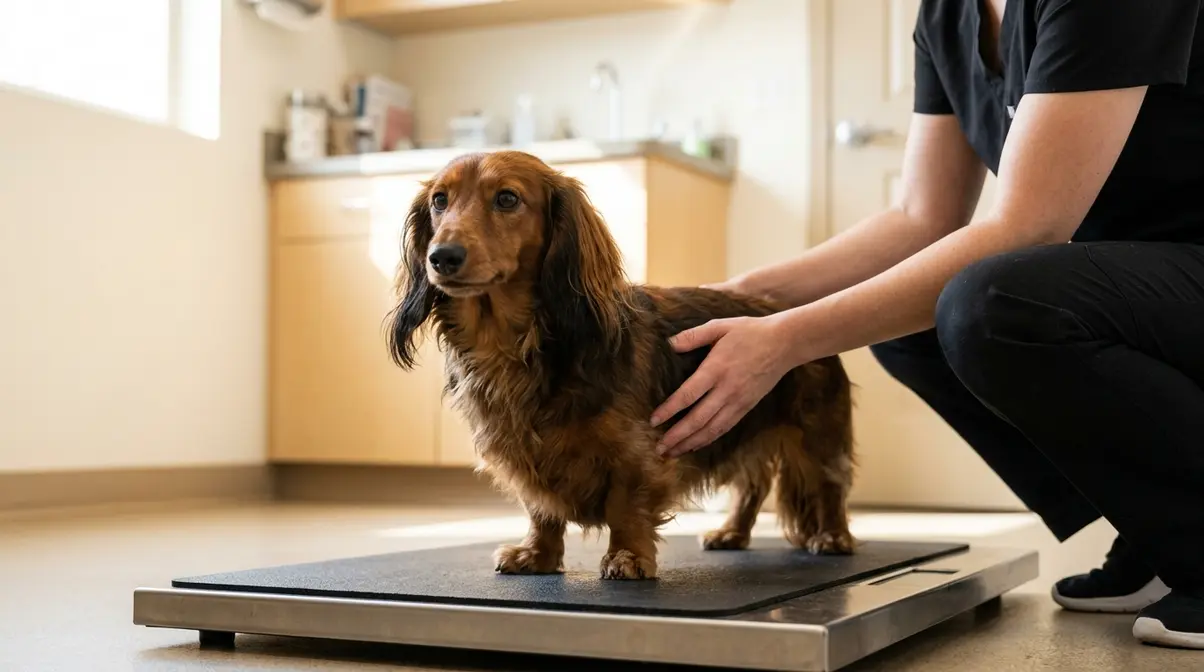
Consider a typical case: a Dachshund who has put on a little weight at age seven. Trimming portions and ending table scraps costs nothing and takes pressure off the spine. That is usually a better first step than any gadget.
The limit is that these tips support health and do not control the outcome. Plenty of dogs live long lives with imperfect care, and some do not despite perfect care.
What Is the Oldest Recorded Dachshund?
Some owners report Dachshunds reaching ages far past the typical range. One owner says, “Mine lived to be 18-20 yrs. We’ve been very lucky.” Another owner says, “My first mini Daschund lived 20 years!!!.” These are personal accounts, not verified records (source).
What exists are reader reports. One YouTube commenter said their Dachshund lived to 18 to 20 years. Another said their first miniature lived 20 years. These are personal accounts, unverified, and best read as rare outliers.
Why do they matter? They show that the 12 to 16 year range is typical, not a hard ceiling. A well-cared-for dog with good genetics and some luck can go beyond it. They are not a target, and they should not make you feel your own dog has fallen short.
If you want a verified record, you would need an official record-keeping body, and this guide does not cite one. Treat stories of very old dogs as heartening, not as evidence of what to expect.
When an Average Lifespan Doesn’t Apply to Your Dachshund
An average hides the individual, so some dogs will sit well outside it. These are the main limits to keep in mind.
- Averages hide individual risk. Dachshunds face a 10 to 12 times higher risk of IVDD than other breeds, but that is a breed pattern (Canine Genetics and Epidemiology (PubMed Central), 2016). Your dog may be at lower or higher risk.
- Sources disagree. Ranges of 12 to 15 and 12 to 16 years both circulate, and the research does not settle which is better.
- Care helps but cannot guarantee years. Good weight control, ramps and vet visits improve the odds. They do not erase bad luck or inherited conditions.
- Know when to get help. Sudden changes in movement, behavior or weight call for your vet, not another round of reading.
Imagine an owner who followed every tip and still lost a dog earlier than hoped. That grief is real, and it is not proof of a mistake. Dogs can have illnesses no one could have caught or prevented.
If you are carrying that kind of guilt, you did the caring part well. The number was never a contract, and your vet is the right person to talk through any questions about what happened.
Next Steps
You do not need to do everything at once. Start with one habit this week, then add others.
- Check your dog’s weight. Feel along the ribs and look at the waist. If you are unsure, ask your vet whether your dog is lean enough.
- Review stairs and furniture. Add a ramp beside the couch or bed, and block stairs where you can.
- Book a vet visit. If it has been a year, schedule a checkup and ask about weight, teeth and back health.
- Learn the warning signs. Keep the vet triggers above in mind, especially sudden changes in movement or behavior.
- Read further on the back. The IVDD warning signs and prevention guide covers risks and prevention in more depth.
If you only do one thing, make it the weight check. It costs nothing, takes five minutes, and speaks to the biggest lever you control.
Your Dachshund’s years are partly luck and partly daily care, and you can only work on one of those. Keep going with the small, steady habits.
FAQ
What is IVDD in Dachshunds?
IVDD is a back disease in which the discs between the spine bones bulge or burst and press on nerves. Dachshunds are at a 10 to 12 times higher risk than other breeds, and an estimated 19 to 24% show signs in their lifetime (Canine Genetics and Epidemiology (PubMed Central), 2016). Your vet can confirm any diagnosis.
How long do weiner dogs live?
Most Dachshunds live 12 to 16 years, about average for a smaller dog breed (PetMD, 2026). Some sources give 12 to 15, so the top end varies. An average describes groups, not one dog, and weight, back care and genetics all influence how long yours lives.