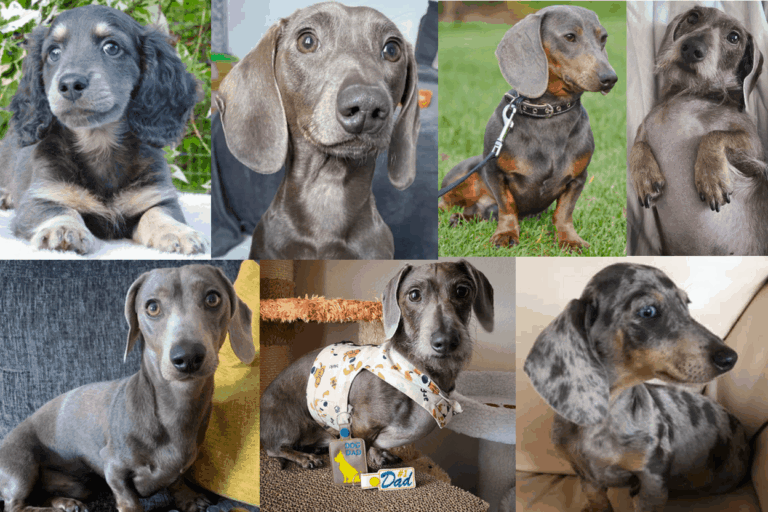
Introduction
“What were dachshunds bred for? Why are they so long?”
These are the questions almost every dachshund owner asks first, and they turn out to have a genuinely fascinating answer. The origin of dachshund as a recognized breed traces back to 17th-century Germany, where hunters and foresters engineered a dog specifically to pursue badgers underground. The name itself tells the whole story: Dachs means badger, Hund means dog. Every unusual physical feature, the long body, the stubby legs, the deep chest, was put there on purpose.
Most sources stop at “German badger dog” and move on. But the real story covers centuries of deliberate breeding, royal patronage, the development of three distinct coat varieties, and a dramatic chapter in American history when the breed was nearly driven out of existence by wartime anti-German sentiment. That full story is what separates a genuine understanding of this breed from a surface-level summary.
This guide covers the full arc: from the breed’s medieval German roots through its coat-type development, size variations, American journey, and the behavioral quirks that history directly explains.
Table of Contents
- What Does “Dachshund” Mean?
- Where Did the Dachshund Come From?
- Why Is the Dachshund So Long?
- The Three Coat Types
- Standard vs. Miniature Dachshund
- The Dachshund in America
- How History Shapes Behavior Today
- Frequently Asked Questions
The origin of the dachshund lies in 17th-century Germany, where breeders engineered a dog purpose-built to hunt badgers underground, a history that explains everything from its long body to its bold personality.
- Name: “Dachshund” is German for “badger dog” (Dachs = badger, Hund = dog), a name unchanged for over 300 years.
- Origin: Developed by German foresters and hunters from the 1600s onward, with roots traceable more than 600 years, according to Taste of the Wild (2022).
- Body shape: Every physical trait, long torso, short legs, large paddle-shaped paws, deep chest, loose skin, was deliberately engineered for underground burrow hunting.
- Coat types: Three distinct varieties (smooth, long-haired, wire-haired) were developed through deliberate crossbreeding with spaniels and terriers.
- The Badger-Built Blueprint: This hunting heritage directly explains modern dachshund behaviors like burrowing under blankets, digging, the loud bark, and fierce loyalty to their person.
What Does “Dachshund” Mean?

The word “dachshund” is German, and it means exactly what it sounds like once you know the components: Dachs (badger) + Hund (dog) = badger dog. Germany is both the country and language of origin for the dachshund breed, and its name reflects that heritage directly. The name is a direct description of function, not appearance, the breed was named for what it hunted, not how it looked. Understanding this vocabulary is the first step toward understanding everything else about the breed, including why the Dachshund (Wikipedia) entry opens with etymology rather than appearance.
The Name “Dachshund” Explained
The origin of dachshund breed history is embedded in its name. “Dachshund” is a German compound word: Dachs (badger) and Hund (dog). The language of origin for the dachshund is German, and the breed’s name is a direct German compound that has never needed translation into other languages. According to the American Kennel Club, the breed’s German history goes back some 600 years, and the name has remained consistent across languages, English simply adopted the German word wholesale rather than translating it.
Before “Dachshund” became the standard term, early records used Dachs Kriecher (“badger crawler”) and Dachs Krieger (“badger warrior”), two descriptive names that capture the dog’s original job with vivid clarity. These older terms eventually gave way to the cleaner, more formal “Dachshund,” but the meaning stayed the same.
The word “dachshund” is German for “badger dog,” combining Dachs (badger) and Hund (dog), a name that has remained unchanged for over 300 years. That consistency reflects just how precisely the breed fulfilled its original purpose: there was never any reason to rename it.
But the name is only the beginning, the story of how this dog was actually built takes us back to the forests of 17th-century Germany.
Common Nicknames: Doxie, Wiener Dog, Teckel, and Dackel
In English, dachshunds go by several affectionate nicknames. “Wiener dog” and “sausage dog” both reference the body shape, that distinctive long, low silhouette. “Doxie” (sometimes spelled “dachsie”) is a simple affectionate shortening widely used among owners and enthusiasts. None of these are formal names; they’re the casual language of people who genuinely love the breed.
In Germany, however, two distinct terms carry real meaning. Dackel is the everyday companion-dog term, what a German child or pet owner would say. Teckel is used specifically for working or hunting dachshunds, reflecting the breed’s dual identity as both a field hunter and a household companion. Neither term describes a separate breed; they are the same dog described through a different lens, one functional, one affectionate.
A German hunter would say Teckel; a German child would say Dackel. English speakers use both interchangeably, usually without knowing the distinction exists. This Teckel-versus-Dackel split is one of the most overlooked facts about the breed, it captures, in two words, the entire tension between the dachshund’s working-dog origins and its life as a beloved companion.
Before we explore how the breed was developed, there’s one more foundational question worth answering: how do you actually say the word?
How Do You Pronounce “Dachshund”?
The correct pronunciation is approximately DAKS-hoont (IPA: /ˈdɑːkshʊnd/). The “ch” in German produces a softer, guttural sound, nothing like the English “ch” in “church.” Common English mispronunciations include “DASH-hound” and “DATCH-sund,” both of which are understandable but technically off. In casual American English, “DAKS-und” is widely accepted and understood without confusion. Breed authorities and longtime enthusiasts generally agree that getting the pronunciation approximately right is more than enough, the dachshund community is welcoming to newcomers regardless of how they say the name.
Now that the name makes sense, let’s trace where this remarkable dog actually came from.
Where Did the Dachshund Come From?
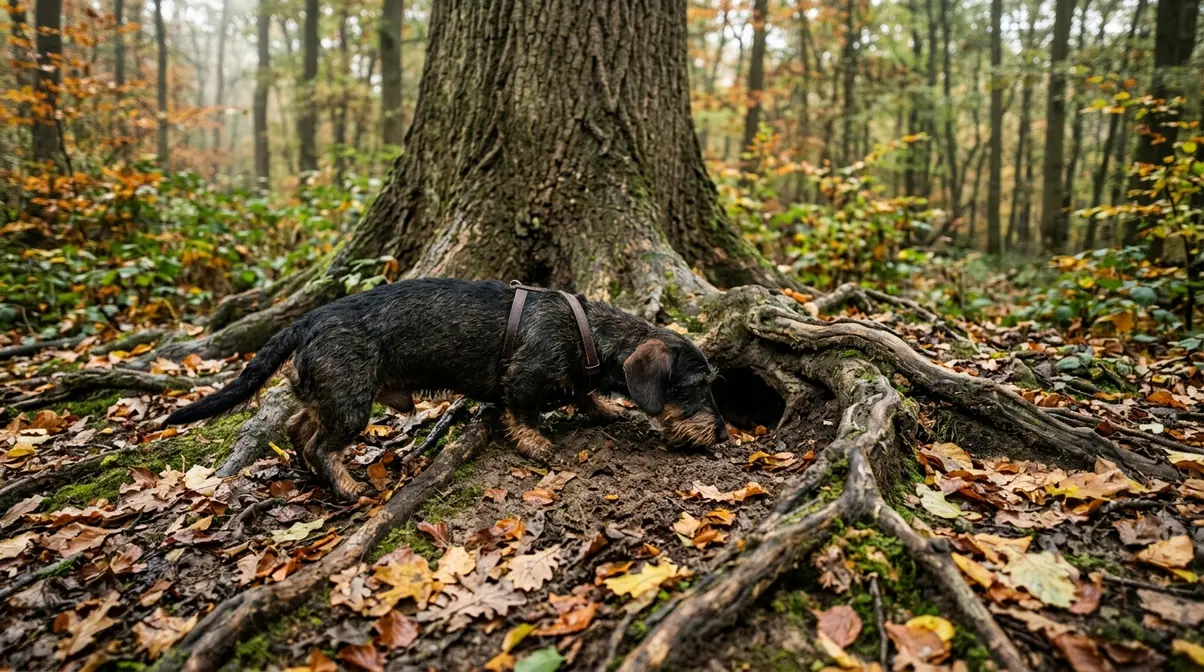
The origin of the dachshund traces to Germany, where foresters and hunters developed the breed from the 17th century onward to pursue badgers underground. The name “dachshund” is German for “badger dog.” Every physical feature, the long body, short legs, and large paws, was deliberately bred to make the dog an effective underground hunter.
That 600-year lineage, confirmed by Taste of the Wild (2022), means the dachshund predates most modern nations. The core design was so effective that breeders saw little reason to change it across the centuries. This is the foundation of what we call “The Badger-Built Blueprint”: a deliberate engineering project, not an accident of nature, in which every trait was selected because it solved a specific problem underground.
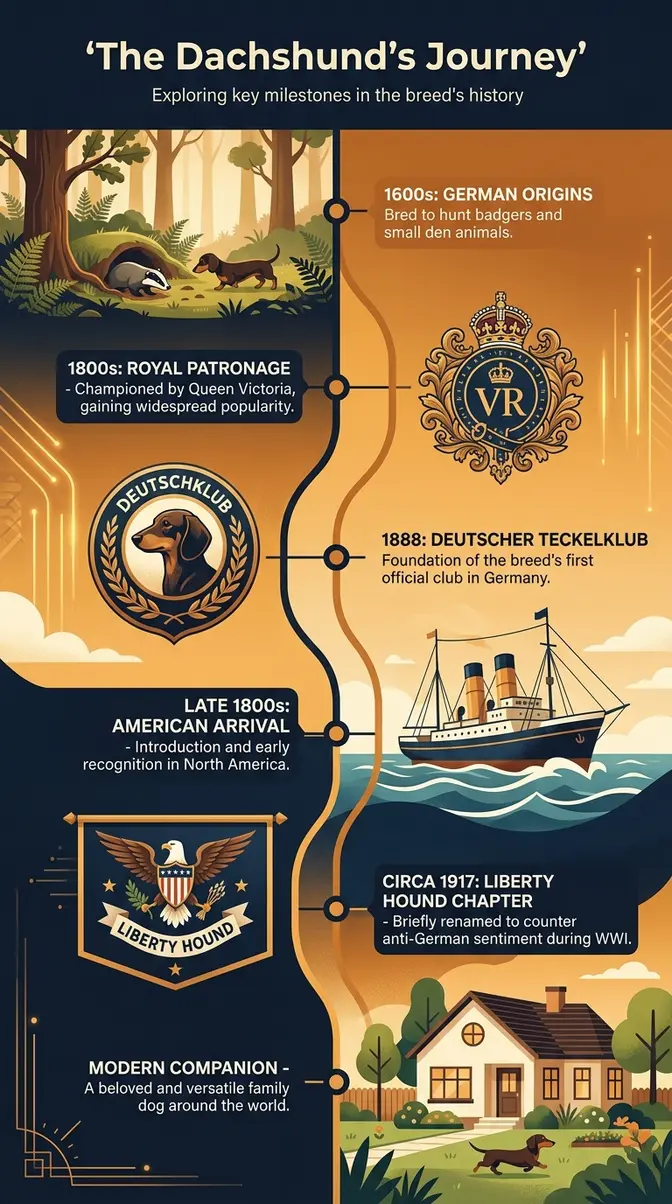
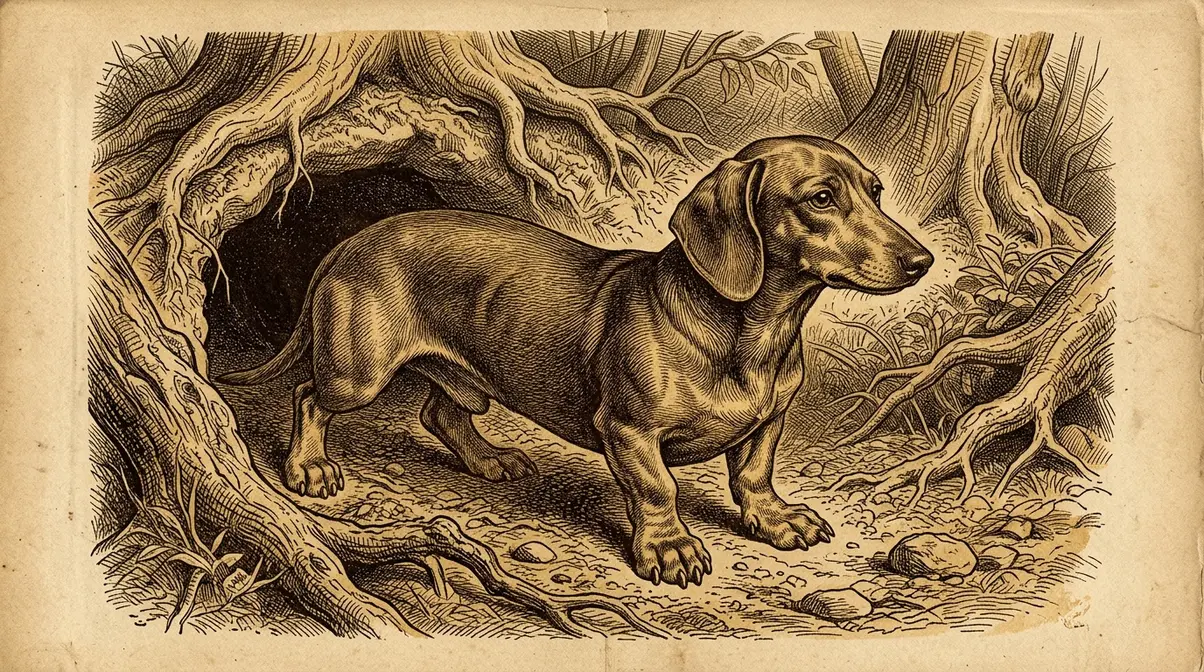
German Roots in the 17th Century
German foresters (Jäger) in the 1600s faced a very specific practical problem: badgers are aggressive, powerful animals that retreat into underground burrows when threatened. No existing breed could track a badger’s scent, follow it into a narrow tunnel, and then confront it alone in the dark. A new kind of dog was needed.
The solution was a deliberate breeding program. Foresters selected for a long, flexible body that could navigate tunnel bends; short, powerful legs for digging and bracing underground; a deep chest to sustain lung capacity during underground exertion; and an unusually bold temperament for a dog of this size. Each trait was chosen because it made the dog more effective at a single, dangerous job.
This is what we call the Badger-Built Blueprint: every unusual physical feature of the dachshund is a direct engineering solution to the challenge of hunting badgers underground. Consider what the dachshund was up against, a badger can be a formidable opponent, and the dachshund was bred to confront it alone, underground, in complete darkness. That context makes the breed’s physical and behavioral traits feel less like quirks and more like precision tools.
According to the American Kennel Club, the dachshund was developed in Germany more than 300 years ago specifically to hunt badgers, with the breed’s German history extending back roughly 600 years in total.
But the dachshund’s story actually begins even earlier than the 17th century.
Early Ancestors: “Dachs Kriecher” and Medieval Hunting Dogs
Dogs with short legs and elongated bodies used for earth-work hunting appear in European illustrations and manuscripts dating back to the 15th century. These were not yet the standardized dachshund, they lacked the breed consistency that later formal development would bring, but they were its unmistakable ancestors. The body plan was already there.
Early names for these dogs included Dachs Kriecher (“badger crawler”) and Dachs Krieger (“badger warrior”), descriptive terms that preceded the modern “Dachshund” and captured the dog’s role with equal clarity. The Dachshund Club of America notes that etchings from the late 1500s already show dogs matching the dachshund’s distinctive profile, suggesting the breed type was well established before formal standardization began.
According to Taste of the Wild (2022), the dachshund’s roots can be traced back more than 600 years, meaning this breed’s lineage predates the founding of many modern European nations. The consistency of that long, low body shape across six centuries of records suggests that the “badger dog” design was so effective, breeders saw little reason to change it.
As the breed became more refined, it attracted the attention of people far beyond the German forest.
The Role of German Foresters and European Royalty
German foresters were the primary architects of the breed, and they bred for function above everything else. The early dachshund was a no-nonsense working dog, not a companion animal, its temperament was selected for courage and independence, not sociability. That working-dog foundation is why the modern dachshund still carries such a strong personality in a compact body. Breed historians often describe this as the “big dog in a small body” phenomenon: the dachshund’s confidence, stubbornness, and territorial alertness are all direct expressions of the working-dog character that foresters deliberately cultivated over generations.
Royal patronage eventually transformed the breed’s social standing. Queen Victoria of England was a well-documented dachshund enthusiast, and her affection for the breed helped introduce it to British and eventually American high society, according to the American Kennel Club. What had been a working hunter became a fashionable companion, and the dual identity of Teckel (working dog) and Dackel (companion) that exists in Germany today traces directly back to this shift.
By the late 19th century, the breed had grown popular enough to warrant an official organization.
The 1888 German Dachshund Club
The Deutscher Teckelklub, the German Dachshund Club, was founded in 1888, making it one of the earliest breed-specific clubs in the world. According to the Dachshund Club of America, the club’s purpose was to standardize the breed: establishing official size, coat, and temperament requirements to ensure consistency across litters and across regions.
The 1888 founding marks the formal beginning of the modern dachshund as a recognized breed, distinct from its working-dog ancestors and the broader category of earth-hunting dogs that preceded it. The origin of dachshund breed history, in the formal sense, begins here, even if the bloodlines stretch back much further.
With the breed now officially standardized, breeders turned their attention to a question that still fascinates owners today: why exactly is the dachshund so long?
Why Is the Dachshund So Long? The Body Built for Badgers
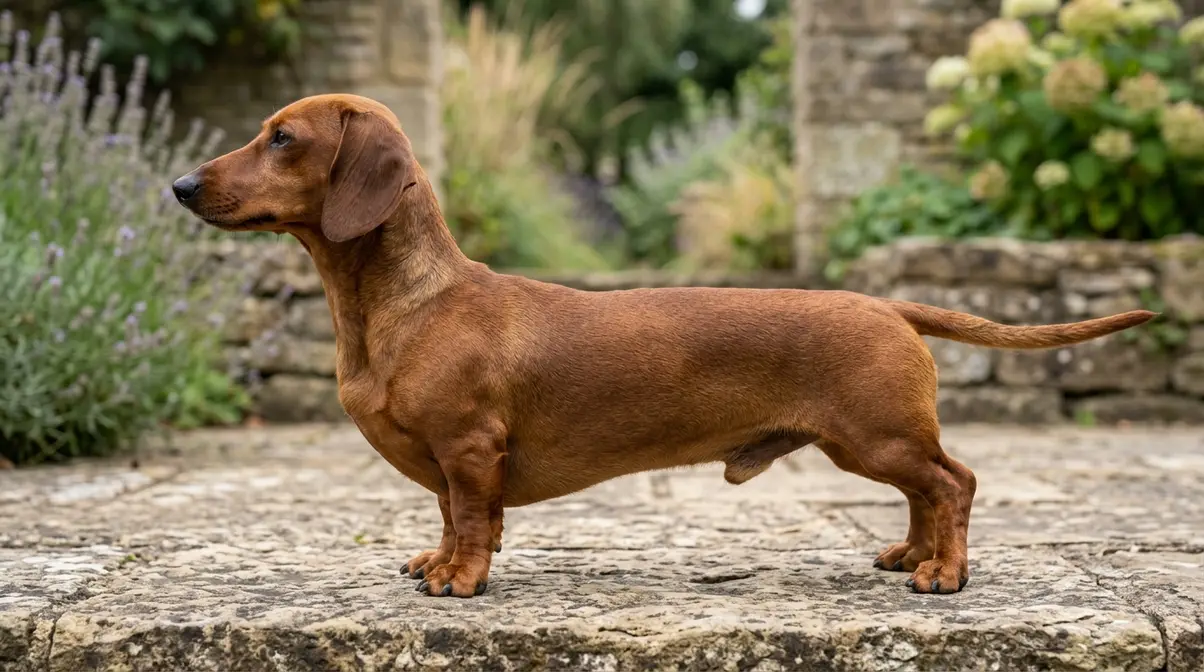
Why is the dachshund so long? The short answer: because that’s what the job required. Every unusual physical trait the breed carries, the long spine, the short legs, the paddle-shaped paws, was engineered over generations to solve a specific underground hunting problem. This is the Badger-Built Blueprint in its most visible form, and it’s one of the most coherent examples of purpose-driven selective breeding in dog history.
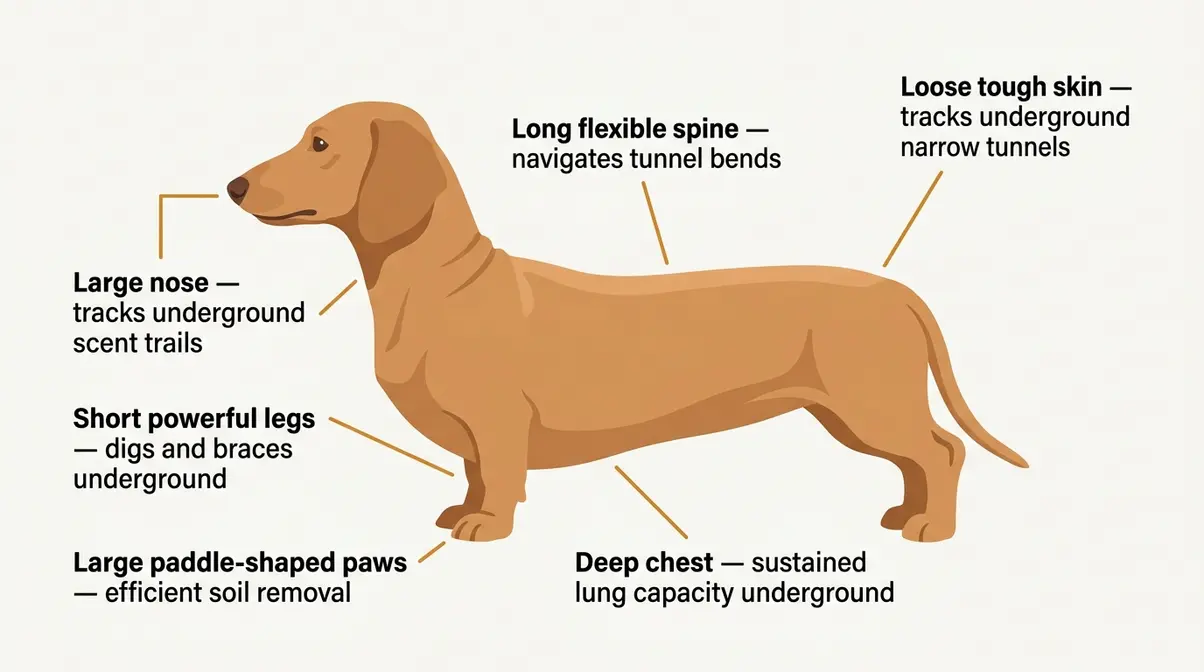
Engineering the Perfect Burrow Hunter
According to the American Kennel Club, the dachshund’s physical traits were deliberately selected for underground hunting effectiveness. Here is what each one actually does:
- Long spine and flexible body, allows the dog to navigate the sharp bends of a badger’s underground tunnel without getting stuck
- Short, powerful legs, built for digging and for bracing against tunnel walls when confronting prey
- Large, paddle-shaped front paws, designed for efficient soil removal, functioning like small shovels
- Deep chest, provides the lung capacity needed for sustained exertion in low-oxygen underground spaces
- Loose, tough skin, allows the dog to turn around inside a narrow tunnel without the skin tearing against the walls (a detail rarely mentioned, but one of the most functionally interesting traits the breed carries)
- Large nose and scent-hound instincts, essential for tracking a badger’s underground scent trail before the dog even enters the burrow
- Bold, fearless temperament, a dog that hesitated at the entrance to a badger’s burrow was simply useless; courage was selected for as deliberately as any physical trait
Every unusual physical feature of the dachshund, from its long spine to its paddle-shaped paws, is a direct engineering solution to the challenge of hunting badgers underground. None of it is accidental. A modern dachshund digging furiously at a blanket is performing the same instinctive excavation motion its ancestors used to open a badger’s tunnel entrance.
These traits didn’t disappear when the dachshund moved from the forest to the living room.
The Badger-Built Blueprint: Traits That Survived
The same physical characteristics that made the dachshund effective underground make it unmistakable as a companion. The burrowing under blankets, the relentless digging in the garden, the surprisingly loud bark for such a small dog, these aren’t random quirks. They are the Badger-Built Blueprint running in a domestic setting.
The loud bark is worth noting specifically: underground, a dachshund’s bark served as a location signal, letting the hunter above ground track exactly where the dog was working. Modern dachshunds bark for the same communicative reason, they are telling you where they are and what they’ve found. The stubbornness that makes training occasionally challenging was equally deliberate: a dog that waited for handler commands while working underground was a liability, not an asset.
The key insight is this: you cannot fully understand a dachshund’s behavior without understanding what it was built to do. Every quirk has a historical explanation, and the next section explores exactly that.
Before those behavioral traits could fully develop, breeders had one more challenge to solve: what should the dachshund look like?
The Three Coat Types: How Each Variety Developed
The dachshund comes in three distinct coat varieties, smooth, long-haired, and wire-haired, and each one was developed for a specific purpose. The Dachshund Club of NSW recognizes all three as separate varieties within the same breed. What most sources don’t explain is how each coat came to exist, and what function it was designed to serve.
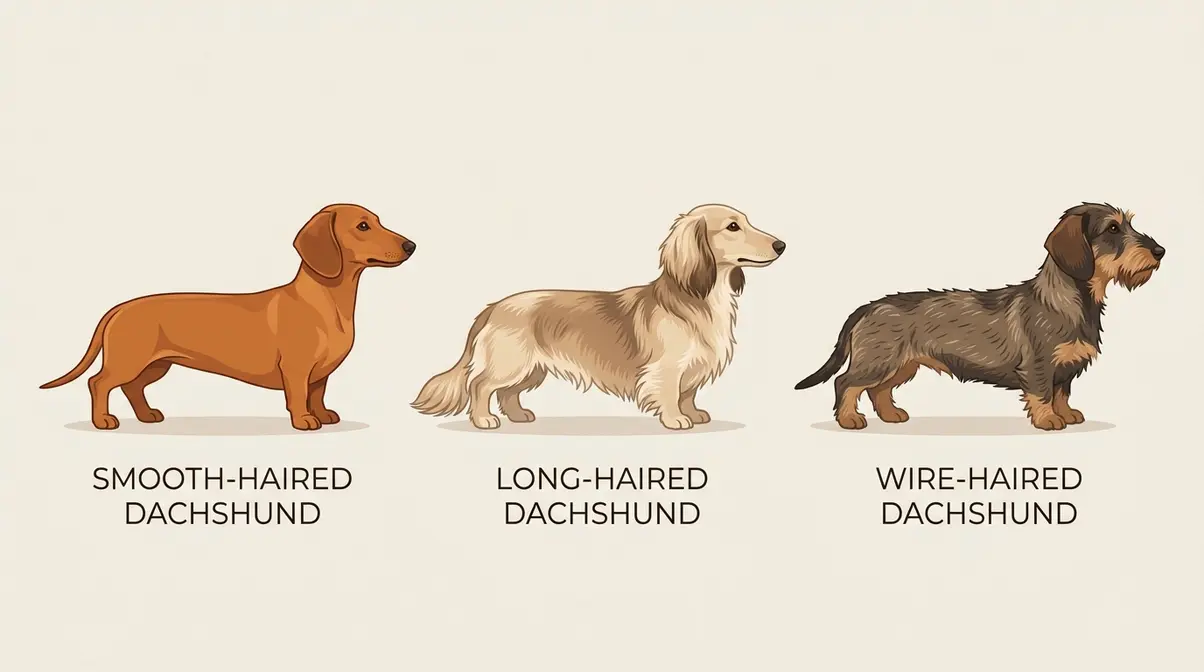
| Coat Type | Developed By Crossing With | Primary Terrain / Use |
|---|---|---|
| Smooth-haired | Original type, no cross | Open fields, general hunting |
| Long-haired | Spaniel breeds | Cold climates, water retrieval |
| Wire-haired | Terrier breeds | Dense undergrowth, rough terrain |
Until 1977, interbreeding between smooth, long-haired, and wire-haired dachshunds was officially permitted in some registries, meaning some dogs today still carry recessive genes for a different coat type, according to the Dachshund Breed Council (2012). A smooth-haired dachshund may carry the gene for a long coat, and vice versa. That genetic legacy is one of the more surprising facts about a breed most people think they know well.
The Smooth-Haired Dachshund
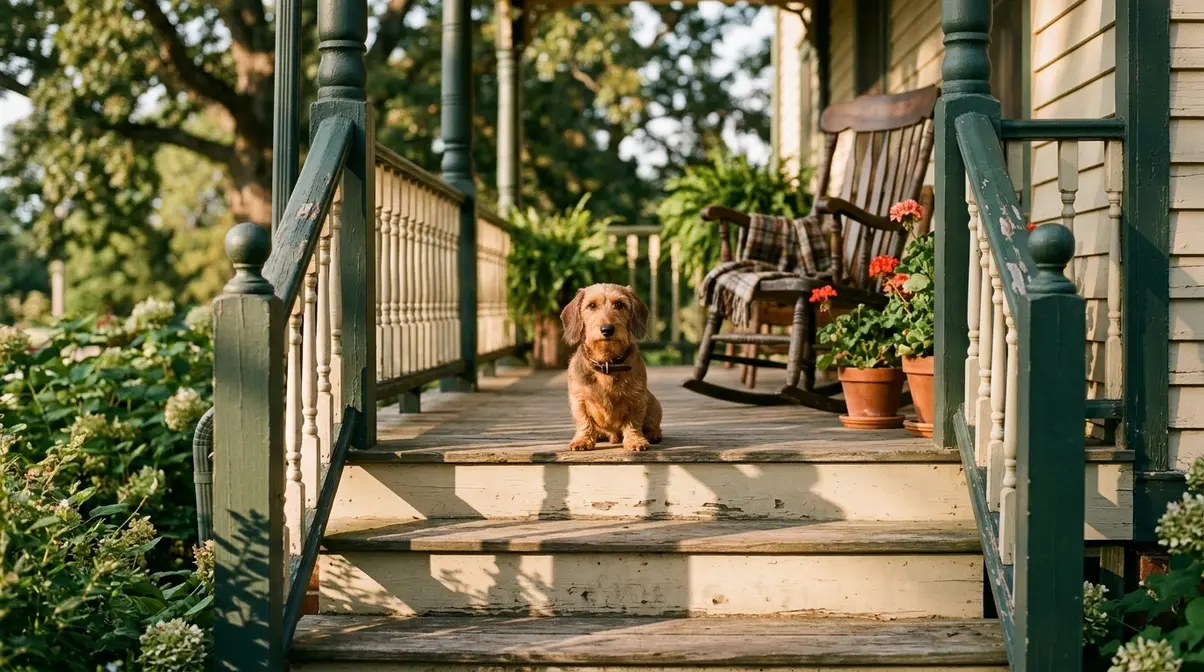
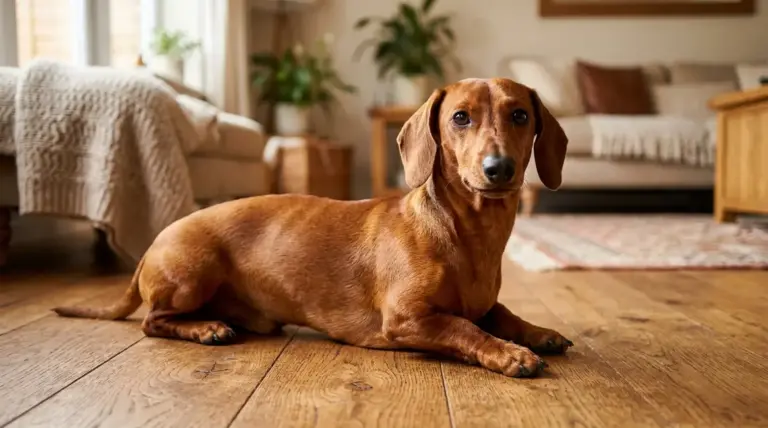
The smooth-haired (also called short-haired) dachshund is the original coat type, the dog that German foresters developed in the 17th century without any crossbreeding. Its short, dense coat was practical for underground work: it didn’t collect mud or debris the way a longer coat would, and it dried quickly after a dog emerged from a burrow.
The smooth-haired variety remains the most internationally recognizable. When most people picture a dachshund, or a “wiener dog,” this is the image that comes to mind. It’s the purest expression of the Badger-Built Blueprint, unmodified by subsequent crossbreeding. For a full look at the color and pattern variations that exist within this variety, explore dachshund colors and patterns.
The long-haired variety came later, and its development required a deliberate cross with another breed.
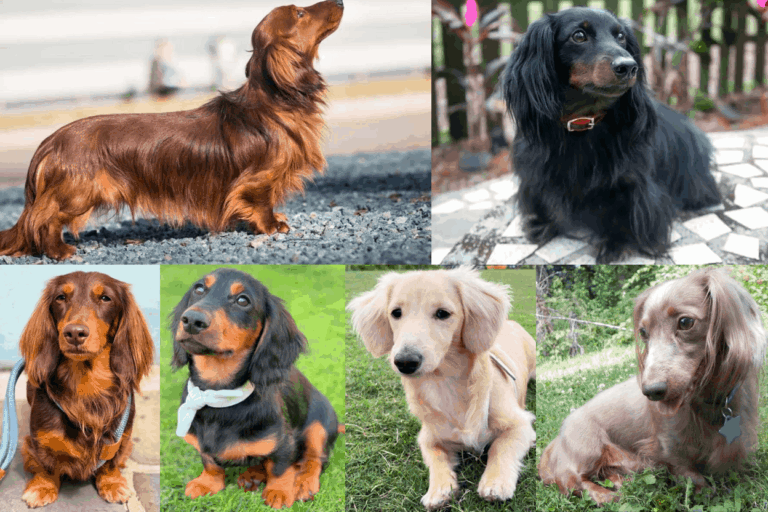
The Long-Haired Dachshund
The long-haired dachshund was developed by crossing the smooth-haired variety with spaniel breeds, most likely to produce a softer, more weather-resistant coat suited to hunting in colder or wetter conditions, according to the Dachshund Club of NSW. The result was a dog with the same low-slung body and strong hunting instincts but a silkier, longer coat that also made it more appealing as a companion animal.
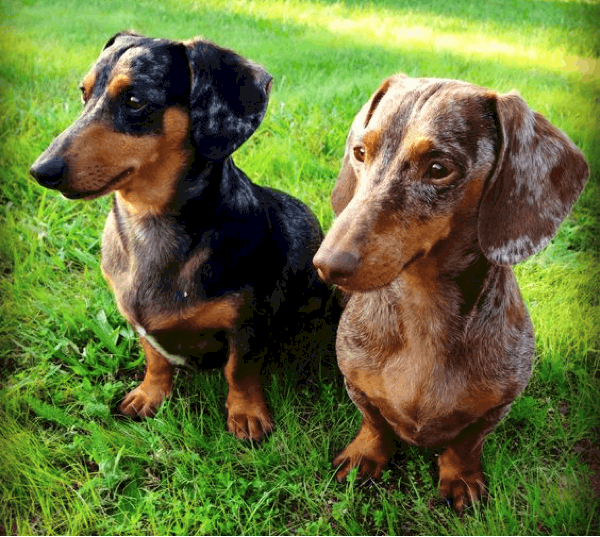
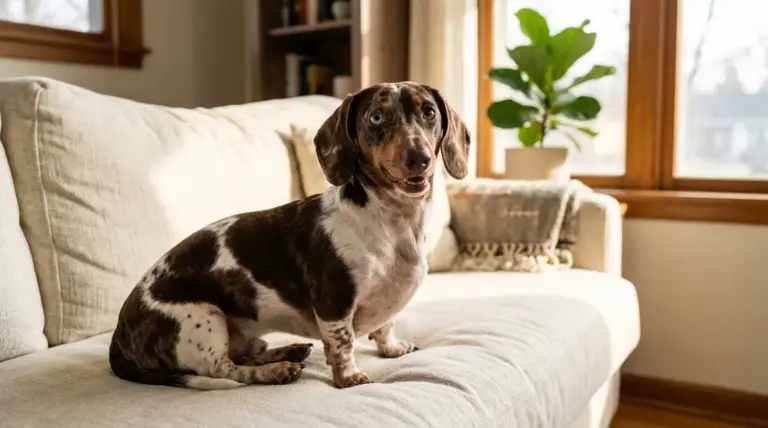
The long-haired variety was particularly popular with European nobility, partly because of its elegant appearance and partly because the softer temperament sometimes associated with spaniel influence made it a more amenable household companion. It retains all the core traits of the original, the dachshund breed origin in function and form, while adding a coat that handles varied weather conditions more gracefully. For those interested in coat pattern variations, the unique dapple dachshund coat is one of the most visually striking examples across all three varieties.
The wire-haired variety came last, and it was the most deliberately engineered of the three.
The Wire-Haired Dachshund
The wire-haired dachshund was developed by crossing the smooth-haired variety with terrier breeds, with the Dandie Dinmont Terrier and similar wire-coated terriers among the likely candidates, though the specific breeds crossed remain subject to verification against AKC and DCA records. The wiry, almost bristly coat that resulted provided real protection against thorns, brambles, and dense undergrowth, extending the Badger-Built Blueprint to rougher terrain where a smooth or long coat would be damaged or snagged.
According to the Dachshund Breed Council (2012), the wire-haired variety carries distinct coat genetics from the other two. It is the least common of the three internationally but is highly regarded among working-dog enthusiasts for its toughness and tenacity in the field, qualities that reflect both the dachshund’s original purpose and the terrier influence in its development.
What makes the coat story even more interesting is what happened when breeders started mixing these varieties.
Interbreeding and Coat Genetics
The genetics of dachshund coat types became more complex once interbreeding between varieties was permitted. Until 1977, crossing smooth, long-haired, and wire-haired dachshunds was officially allowed in some registries, according to the Dachshund Breed Council (2012). That practice left a genetic imprint: some modern dachshunds carry recessive genes for a different coat type than the one they visibly display. A smooth-haired dog may carry the long-coat gene; a wire-haired may carry smooth. Today, most major kennel clubs treat the three coat types as separate varieties for show purposes, though they remain the same breed across all three.
With three coat types established, breeders also began developing two distinct sizes, and the story of the miniature dachshund is one of the most interesting in the breed’s history.
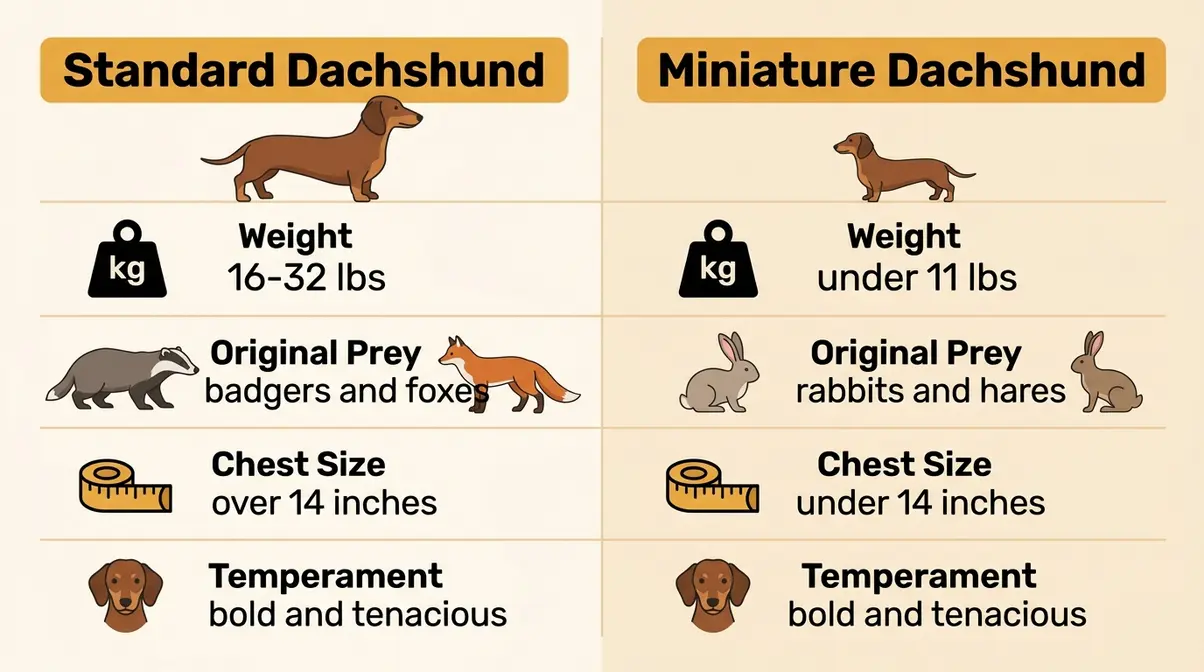
Standard vs. Miniature Dachshund: What’s the Difference?
The dachshund comes in two sizes, and the difference between them is more meaningful than a number on a scale. The miniature dachshund wasn’t created as a smaller companion animal, it was developed as a functional hunting dog in its own right, built for prey and terrain the standard couldn’t reach. The Dachshund Club of NSW recognizes both sizes across all three coat types.
| Feature | Standard Dachshund | Miniature Dachshund |
|---|---|---|
| Weight | 16-32 lbs | Under 11 lbs |
| Original prey | Badgers, foxes | Rabbits, hares |
| Chest circumference (AKC) | Over 14 inches | Under 14 inches |
| Temperament | Bold, tenacious | Bold, tenacious (similar) |
Note: AKC weight and chest measurements reflect general breed standards; verify exact current figures at akc.org before publishing.
Origins of the Miniature Dachshund
The miniature dachshund was developed by selectively breeding the smallest standard dachshunds together over successive generations. The goal was practical: rabbit and hare burrows are significantly narrower than badger tunnels, and the standard-sized dachshund simply couldn’t fit. A scaled-down version of the same dog could.
This was a functional adaptation of the Badger-Built Blueprint to a different prey animal, not a cosmetic downsizing for the show ring or the lap. The miniature retained every core trait of the standard: the long body, the short powerful legs, the bold temperament, and the strong hunting instinct. According to the American Kennel Club, the miniature dachshund was purpose-bred for hunting smaller game in narrower burrows, a working dog in its own right, not a companion compromise.
Owners and breed enthusiasts frequently note that miniature dachshunds display the same assertive, confident character as their standard-sized counterparts, sometimes even more intensely, given the terrier influence present in some miniature lines. The “big dog in a small body” description applies just as accurately to the miniature as it does to the standard.
Beyond size, there are also meaningful differences between dachshunds bred in different countries.
Size, Weight, and Purpose Compared
The practical differences between sizes matter for prospective owners. A standard dachshund at 16-32 lbs is a substantial, muscular dog, heavier than many people expect from an animal this close to the ground. A miniature at under 11 lbs is genuinely small, though it rarely behaves like it.
Temperament is broadly similar between sizes, though some owners and breeders note that miniatures can be slightly more excitable, possibly reflecting terrier influence in some lines. Both sizes come in all three coat types, which gives prospective owners six possible combinations before factoring in color or pattern. For those drawn to rarer color variations, the rare blue dachshund is one of the more striking examples of how far coat genetics can range within the breed.
One distinction that surprises many owners is the difference between dachshunds bred in different countries.
Regional Variations: American vs. European Dachshunds
American-bred dachshunds tend to be slightly larger and stouter, with more forechest development, a result of decades of selective breeding for the show ring rather than the field. Some breed enthusiasts describe this as a gradual drift away from the original working-dog type, though the dogs remain fully capable of the temperament and instincts the breed is known for.
According to Autumn Breeze Dachshunds, Russian-bred dachshunds are often described as having a slighter, more athletic build closer to the original working-dog type, though these are breeder-community observations rather than kennel club standards. European lines more broadly are often described by breed enthusiasts as maintaining a slightly different coat texture and build. According to Dachshund History Online, European lines have maintained a closer connection to field-type conformation in some programs, though this varies considerably by breeder. These are not separate breeds, they are the same dog shaped by different priorities.
The dachshund’s journey from German forests to American homes is one of the most dramatic chapters in the breed’s history.
The Dachshund in America: From Import to Liberty Hound
The dachshund arrived in America as a fashionable hunting dog and nearly disappeared within a generation, not because of any fault of its own, but because of a war it had nothing to do with. The breed’s German name and German associations made it a target during both World Wars, and the story of how American owners fought to protect it is one of the most emotionally resonant chapters in dachshund history.
Arrival in America and Early Popularity
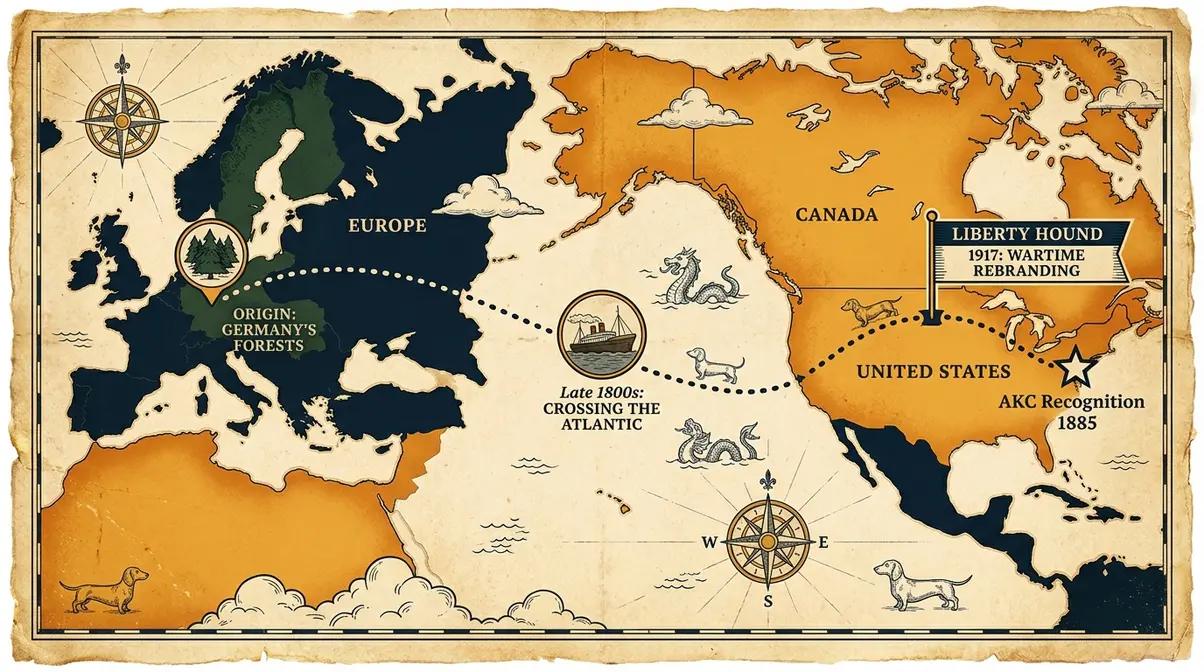
The dachshund reached American shores in the late 1800s, brought over primarily by German immigrants and hunting enthusiasts who valued it as a working dog. The breed quickly gained an audience beyond the hunting community, its distinctive silhouette and bold, confident personality made it a natural conversation piece and a fashionable companion.
According to the Dachshund Club of America, the AKC recognized the dachshund in 1885, making it one of the earlier breeds formally registered in the United States. By the early 1900s, the breed had established a dedicated following of American breeders and owners who appreciated exactly the qualities that had made it a great hunter: confidence, curiosity, and a loyalty to its people that bordered on obsessive.
The same qualities that made the dachshund effective underground, independence, tenacity, alertness, translated surprisingly well to life as a companion animal. Then came the First World War, and everything changed.
World War I and the “Liberty Hound” Rebranding
When the United States entered WWI in 1917, anti-German sentiment swept through American culture with remarkable speed and intensity. The dachshund, visually German, nominally German, and associated in the public mind with the enemy, became a casualty of that hostility. According to the Dachshund Club of America, owners reported their dogs being attacked in public, and the breed’s popularity dropped sharply almost overnight.
In response, some American owners began calling their dogs “Liberty Hounds” or “Liberty Pups,” a deliberate rebranding effort designed to distance the breed from its German origins and protect both the dogs and their owners from public hostility. The dachshund became a symbol of the enemy in political cartoons and wartime propaganda, depicted alongside German stereotypes in ways that had nothing to do with the actual animals living in American homes.
The breed’s dachshund breed origin in Germany had become a liability. The irony is striking: by 1917, these were American dogs, owned by American families, who had lived in the United States for decades. The hostility was directed at a name and a shape, not a nationality.
WWII brought a second wave of the same anti-German sentiment, and the breed’s popularity dropped again, though less severely than during WWI. The Liberty Hound chapter remains the most under-reported story in dachshund history, and the most vivid example of how cultural politics can affect animal welfare in ways that have nothing to do with the animals themselves.
The breed’s recovery after the wars is a testament to how deeply it had embedded itself in American life.
Post-War Recovery and AKC Recognition
After WWII, the dachshund’s popularity gradually recovered. American owners who had stayed loyal to the breed through both wars helped rebuild its reputation, and by the mid-20th century the dachshund had re-established itself as one of America’s most beloved companion breeds. The Dachshund Club of America continued to support the breed’s development and promote its working-dog heritage alongside its companion qualities.
The breed’s resilience through two world wars mirrors the stubbornness and tenacity that made it a great hunter, the Badger-Built Blueprint at work not in a tunnel, but in history. A dog bred to confront a badger alone underground is not a dog that disappears quietly. According to the American Kennel Club’s breed popularity rankings, the dachshund has historically ranked among the most popular breeds registered in the United States, a position it has maintained for decades.
Understanding this history makes the dachshund’s modern behavior far easier to interpret.
How the Dachshund’s History Shapes Its Behavior Today

Every distinctive dachshund behavior has a historical explanation. The Badger-Built Blueprint didn’t stop at the breed’s body, it shaped its personality too. When you understand what the dachshund was engineered to do, the behaviors that owners find most puzzling start to make complete sense. The dachshund’s stubbornness is not a personality flaw, it was a survival trait, bred into the dog to enable independent decision-making underground where no handler could intervene. That insight reframes a lot of dachshund ownership, and it connects the origin of dachshund breed history directly to the dog on your couch today.
Burrowing, Digging, and the Hunting Instinct
Burrowing under blankets is a direct expression of the tunnel-entry instinct. The motion a dachshund makes pushing under a duvet, nose first, body following in a low, driving movement, is the same motion its ancestors used to enter a badger’s burrow. It is comfort-seeking and instinct running together, which is why it happens so reliably even in dogs that have never been near a field.
The digging instinct works the same way. Whether it’s the garden, the sofa cushions, or the carpet in front of the back door, the dachshund is performing excavation behavior, the same efficient digging motion those paddle-shaped paws were designed for. According to Purina, these behavioral traits are deeply rooted in the breed’s hunting history and are among its most consistent characteristics across all coat types and sizes.
The loud, deep bark is equally historical. Underground, a dachshund’s bark served a navigation function, it told the hunter above ground exactly where the dog was working. Modern dachshunds bark for the same communicative reason: to signal location, to alert, to report. The volume relative to the dog’s size is not incidental; it was a design feature. Breed authorities consistently note that the dachshund’s bark is disproportionately large for its body, a deliberate trait that allowed hunters to track their dog’s position through several feet of earth.
The dachshund’s social behaviors are equally rooted in its hunting past.
Loyalty, Stubbornness, and Pack Mentality
Dachshunds were often worked in small packs, which bred a strong pack mentality and a deep attachment to their group. In a domestic setting, you are the pack. This explains the “velcro dog” behavior that dachshund owners know well: the following from room to room, the insistence on sleeping on or near their person, the vocal protests when left alone. These are not signs of neediness, they are pack-bonding behaviors that have been in the breed for centuries.
The stubbornness deserves a more generous interpretation than it usually gets. A dachshund working underground had no handler to direct it. It had to make independent decisions about whether to press forward, hold position, or retreat, decisions that could mean the difference between a successful hunt and injury. Waiting for a command was not an option. Modern dachshunds retain this independent streak because it was bred in deliberately, not by accident.
“How do you know if a dachshund loves you?” The signs are all pack-bonding behaviors: following you from room to room, sleeping on you, vocalizing when you leave, choosing your lap over every other surface in the room. These behaviors trace directly back to the hunting pack. The dachshund’s loyalty is not a soft trait, it is a working trait that found a new home in the living room. Breed historians and behaviorists alike point to this pack-bonding instinct as one of the defining characteristics that makes the dachshund such a devoted companion despite its independent nature.
With that context in mind, here are answers to the most common questions about the dachshund’s origin and personality.
Frequently Asked Questions About the Dachshund’s Origin
Are Dachshunds Polish?
No, dachshunds are not Polish. The breed originated in Germany, where it was developed by German foresters and hunters starting in the 17th century. The name “dachshund” is German and translates directly to “badger dog.” Poland has no historical claim to the breed’s development or standardization. The confusion may arise from the breed’s widespread popularity across Central Europe, but Germany is unambiguously the country of origin.
What Were Dachshunds Originally Bred For?
Dachshunds were originally bred in Germany to hunt badgers underground. Their name literally means “badger dog,” Dachs for badger, Hund for dog. Their long, low bodies and short, powerful legs were engineered to follow a badger into its burrow, confront it, and either flush it out or hold it at bay until the hunter arrived. They were also used to hunt foxes, rabbits, and other burrow-dwelling animals across varied terrain.
When Did the Dachshund Breed Originate?
The origin of the dachshund as a formally developed breed dates to 17th and 18th century Germany. However, dogs with similar short-legged, elongated bodies appear in European illustrations as far back as the 15th century, and the breed’s roots have been traced back more than 600 years. The Deutscher Teckelklub, the official German Dachshund Club, was founded in 1888, marking the beginning of the modern standardized dachshund as a recognized breed distinct from its working-dog predecessors.
How Do You Pronounce “Dachshund”?
The correct pronunciation is approximately “DAKS-hoont.” The “ch” in German produces a softer, guttural sound, not the English “ch” in “church.” Common English mispronunciations include “DASH-hound” and “DATCH-sund.” In casual American English, “DAKS-und” is widely understood and accepted. If you’re speaking with a German speaker, “DAKS-hoont” is the closest approximation most English speakers can manage comfortably without formal German training.
What Is a Doxie?
“Doxie” (also spelled “dachsie”) is a common informal nickname for the dachshund. It is one of several English nicknames for the breed, alongside “wiener dog” and “sausage dog,” both of which reference the breed’s distinctive elongated body shape. “Doxie” is affectionate and widely used among owners and enthusiasts across North America. It is not a separate breed, it refers to the same dog as “dachshund,” in any of its six coat-and-size combinations.
What Are the Differences Between a Russian Dachshund and an American Dachshund?
Russian-bred and American-bred dachshunds are the same breed with different breeding emphases, not separate breeds. American-bred dachshunds tend to be slightly larger and stouter, with more forechest development, a result of decades of show-ring breeding priorities. European and Russian-bred dachshunds are often described by breed enthusiasts as having a slighter, more athletic build closer to the original working-dog type. Neither is superior; the differences reflect breeding priorities rather than any fundamental distinction in the dogs themselves.
Why Do Dachshunds Like to Sleep on You?
Dachshunds sleep on their owners because of deep-rooted pack instincts inherited from their hunting history. Originally worked in small packs, dachshunds developed a strong attachment to their group, and in a domestic setting, you are the pack. Sleeping on or near you provides warmth, security, and pack-bonding. It also reflects the breed’s den-dwelling instincts: in the field, pack members slept together for warmth and protection, a behavior that transferred seamlessly to the domestic sofa.
Do Dachshunds Like Being Under Blankets?
Yes, burrowing under blankets is one of the most characteristic dachshund behaviors, and it connects directly to their hunting history. Dachshunds were bred to enter underground burrows, and the motion of pushing under a blanket mirrors that tunnel-entry instinct precisely. It also provides the warmth and sense of enclosure that their ancestors found in a burrow. Most dachshunds will seek out a blanket given any opportunity, it is one of the clearest expressions of the Badger-Built Blueprint in everyday life.
What the Dachshund’s Past Tells You About Your Dog Today
For anyone curious about the origin of the dachshund, the answer is both simple and remarkable. Germany’s foresters engineered a dog over 600 years ago, according to Taste of the Wild (2022), whose every physical and behavioral trait was a solution to a single problem: hunting badgers underground. That heritage is still visible in every dachshund alive today, from the smooth-haired standard following its owner room to room, to the miniature wire-haired burrowing under the nearest blanket.
The Badger-Built Blueprint is the lens that makes all of it coherent. The long body, the digging, the burrowing, the stubbornness, the loyalty, none of it is random. Every trait traces back to a German forest and a badger’s burrow, shaped by centuries of deliberate breeding for a single, demanding job. Now you know why your dachshund is so long. And why it acts like it owns the place.
If you’re thinking about bringing a dachshund into your home, or you simply want to understand yours better, our short-haired dachshund guide covers temperament, training, grooming and costs. The history is fascinating. The dog itself is even better.
Sources
- Dachshund Breed Council, “Coat and Colour” (2012). dachshundbreedcouncil.files.wordpress.com